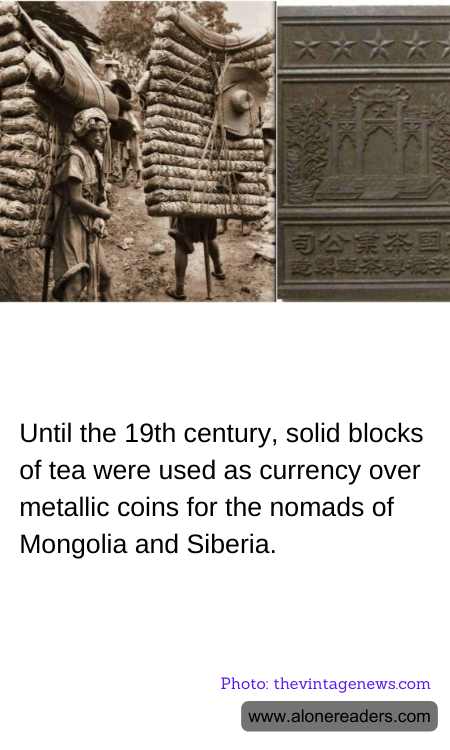
Until the 19th century, the nomads of Mongolia and Siberia utilized solid blocks of tea as a form of currency instead of traditional metallic coins, demonstrating a unique example of commodity money in the historical economic practices of these regions. This tradition stemmed from the high value placed on tea in these societies, where it was not only a staple beverage but also a vital component of daily nutrition and social ritual.
These tea bricks, crafted from compressed tea leaves, were favored for several reasons. Firstly, they were durable and easy to transport across the vast and harsh terrains of Mongolia and Siberia. Secondly, the bricks could be divided into smaller units, making smaller transactions feasible—a vital characteristic for any form of money. The use of tea as currency also facilitated trade, especially with neighboring China, where tea was a highly sought-after commodity.
The production of these tea bricks involved a detailed process. Tea leaves were first dried and ground into a powder, then mixed with water and sometimes other additives like flour or blood to bind the mixture. The resulting paste was then pressed into molds and dried, resulting in hard, compact blocks that were easy to stack and store.
The economic system that embraced tea as currency also reflected the cultural significance of tea in these societies. In addition to being a drink, tea played crucial roles in various social rituals and was often a key element in hospitality customs, consumed multiple times a day.
By the end of the 19th century, the advent of modern currency systems and the expansion of global trade networks began to diminish the use of tea bricks as money. However, this fascinating monetary use of tea left a lasting legacy that underscores the diversity of economic systems and the adaptability of commodities in human history. It offers a compelling glimpse into how natural products can assume vital economic roles in different cultural contexts. Today, while no longer used as currency, these tea bricks still exist and have become a cultural artifact, valued both for their historical significance and their unique aesthetic.
