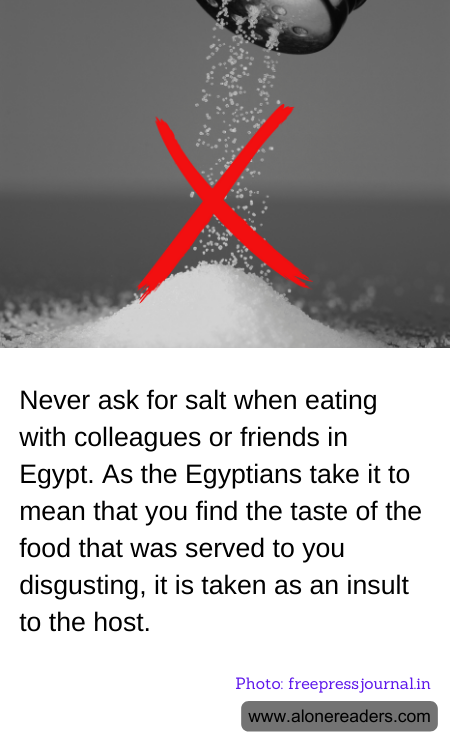
In Egypt, cultural nuances and dining etiquette play significant roles in social interactions and the ways in which people connect and communicate over meals. One particularly intriguing aspect of Egyptian dining etiquette concerns the simple act of asking for salt while at a meal. For those accustomed to personalizing a dish at the table, it may come as a surprise that in Egypt, requesting salt during a meal can be perceived very negatively.
When dining in Egypt, whether with colleagues, friends, or even at a more casual gathering, asking for salt after being served is generally considered a faux pas. This action is traditionally interpreted as suggesting that the food is not prepared to your satisfaction. In a culture that prizes hospitality and takes great pride in culinary offerings, indicating that the food lacks flavor or needs additional seasoning can be seen as an insult to the host or chef. This interpretation stems from a strong cultural emphasis on hospitality and respect for the effort that goes into preparing and serving meals.
Food and meal-sharing are significant elements of Egyptian social life and are deeply infused with meanings of respect, tradition, and community. Hence, the meals are typically prepared with considerable care regarding ingredients and seasoning. Hosts often go to great lengths to ensure that the flavoring is appropriate and to cater to the tastes of their guests. Therefore, altering the seasoning at the table could imply that the host has failed in these respects.
For travelers, expatriates, and even locals who are less familiar with this particular dining etiquette, it is beneficial to follow a simple rule: enjoy the meal as it is served without asking for additional seasoning like salt. Appreciation of the meal as presented can be an important gesture of respect and gratitude towards your host. If you find yourself in a situation where the food's seasoning may not be to your personal taste, it might be better to focus on other elements of the meal or to eat what you can without comment. The act of sharing a meal, after all, is more about the communal experience and less about individual preferences.
Understanding and adapting to such cultural norms in dining can significantly enhance the experience of dining with Egyptians and can ensure that mutual respect and cordiality are maintained. It's a small but meaningful way to show cultural sensitivity and to foster good relationships, whether in personal or professional settings.
