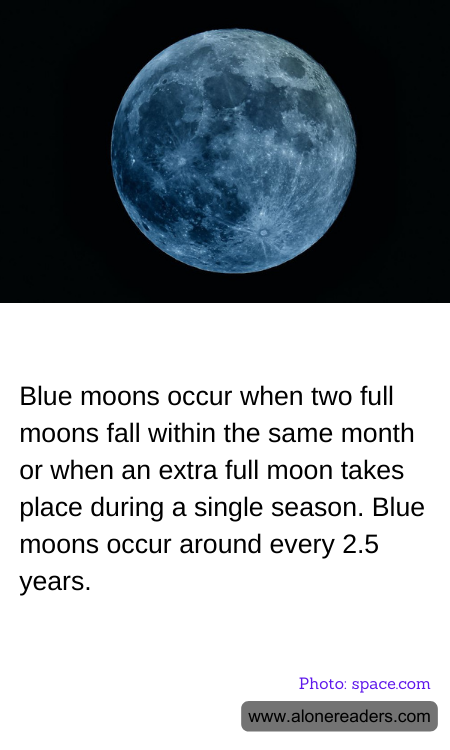
A blue moon is a rare and fascinating astronomical occurrence that captures the imagination of both astronomers and cultural enthusiasts alike. Despite the popular phrase "once in a blue moon," these events are relatively more frequent, happening approximately every 2.5 years. The concept of a blue moon can be understood in two different ways, each dependent on the way we define the timing of this lunar phenomenon.
The first and more traditional definition of a blue moon is when there are four full moons in a single season – winter, spring, summer, or fall – rather than the usual three. This extra full moon is what we refer to as the blue moon. The seasons are defined by the solstices and equinoxes, with each season lasting about three months and typically including three full moons. When a season contains four full moons, the third full moon is called a blue moon.
The second, more modern definition of a blue moon is perhaps the best known: when two full moons occur within one calendar month. This definition arose from a misinterpretation of the original rule published in a 1946 issue of "Sky and Telescope" magazine, but it has since caught the public's imagination and is widely accepted today. Under this definition, the second full moon in a single month is called a blue moon.
Interestingly, the term 'blue moon' doesn't imply the color of the moon. The origin of the term is a bit unclear. It may have come from the Old English word "belewe," which means "to betray." Originally, perhaps, it meant something like "betrayer moon," because it betrayed the usual perception of one full moon per month or one per season. Another theory suggests it might relate to the appearance of the moon in certain atmospheric conditions: occasionally, the moon can appear bluish due is to smoke or dust particles in the atmosphere, as happened after the eruption of Krakatoa in 1883, which caused the moon to appear blue around the world.
For the science and stargazing enthusiast, a blue moon provides a special opportunity to observe the natural world and ponder the cosmos' rhythms. In folklore and popular culture, blue moons are often associated with mystery, romance, and introspection. They are celebrated in art, music, and literature and often symbolize rarity and wonder.
In essence, whether occurring due to an extra seasonal full moon or by squeezing two full moons into a single calendar month, a blue moon reminds us of the beautiful unpredictability of our natural world and our continuing fascination with the night sky.
