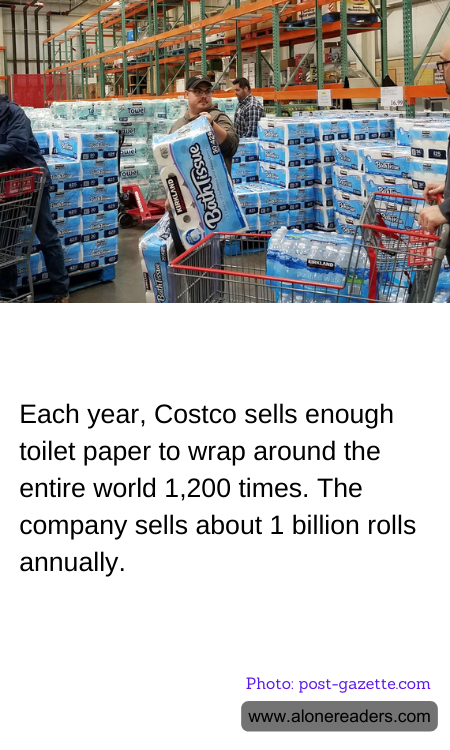
Costco, the multinational corporation known for its vast warehouses and membership-only policy, has reached an astonishing milestone in its sales of toilet paper. Remarkably, the company sells enough toilet paper each year to circle the globe an astounding 1,200 times. This translates to approximately 1 billion rolls sold annually. These figures not only illustrate the huge demand for such a basic commodity but also highlight Costco's significant influence in the global retail market.
The sale of toilet paper is a key indicator of Costco's ability to leverage bulk buying and selling to pass savings on to consumers. The strategy of offering products in larger quantities at lower prices per unit meets both individual and small business needs. This approach has cemented Costco’s reputation as a go-to source for household essentials including toilet paper, which remains a staple in homes and industries alike.
The environmental considerations of such large-scale sales are also worth noting. Though the convenience and cost-effectiveness of bulk purchasing are clear, it also poses questions about sustainability. In response, Costco has made efforts to source more sustainable options and to include recycled materials in their paper goods. The move towards more environmentally friendly practices demonstrates an awareness of their corporate responsibility.
Moreover, the sheer volume of toilet paper sold by Costco underscores the logistical prowess of the company. Efficient stock management, distribution, and the ability to meet customer demands consistently are hallmarks that have helped Costco maintain its market position amidst fierce competition. This operational excellence ensures that customers have access to essential products like toilet paper without facing shortages—a significant advantage, particularly highlighted during the COVID-19 pandemic, when toilet paper became emblematic of panic buying.
In summary, Costco's sale of 1 billion rolls of toilet paper per year is more than a statistic; it's a testament to the company's market strategy, commitment to sustainability, and operational expertise. These factors combined continue to draw in millions of members globally, willing to invest in the annual membership that grants them access to these and other products at competitively low prices.
