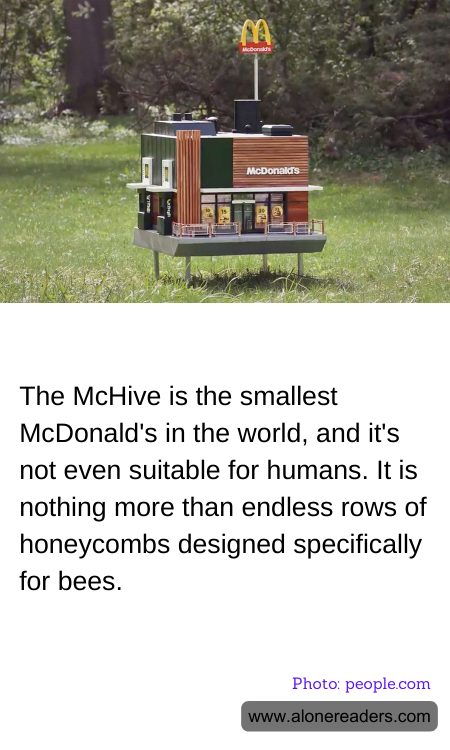
In a whimsical twist on corporate responsibility and biodiversity awareness, McDonald's unveiled the "McHive," acclaimed as the world's smallest McDonald's, and no, you won't be able to order a burger there. This miniaturized version of their iconic restaurant is not meant for human guests but for bees, the planet's crucial pollinators whose populations have been declining dangerously.
Situated in Sweden, the McHive emerged as part of McDonald's Sweden's initiative to support local bee populations. The project began when franchisees around the country started replacing the grass around their restaurants with flowers and plants that are important for the wellbeing of bees. Some locations even installed beehives on their rooftops. This unique project serves as a visual reminder of the company's commitment to environmental sustainability.
From a distance, the McHive looks like any other McDonald’s outlet, complete with the golden arches logo and miniature advertising posters. However, on closer inspection, it's actually a fully functional beehive. Designed by award-winning set designer Nicklas Nilsson, the McHive represents a continuation of McDonald's innovative approach to addressing ecological challenges. The hive was constructed to house thousands of bees, with the interior featuring wooden frames for the bees to build their wax honeycombs.
Auctioned at a charity event, the McHive was an instant hit and raised substantial funds for the Ronald McDonald House Charities. This concept has inspired other franchises globally to adopt similar measures, using the appeal of McDonald's global brand to shine a spotlight on the plight of bees and other pollinators.
The McHive underscores a larger movement among big businesses towards adopting more environmentally friendly practices. It highlights how even small, symbolic acts can raise awareness and influence positive environmental change. This initiative by McDonald's serves not only to protect local bee populations but also encourages other corporations to think creatively about how their business practices can benefit the environment. With the McHive, McDonald's offers a blueprint for sustainability efforts that combine innovation, education, and community engagement. This small-scale project with large-scale implications serves as a beacon of corporate social responsibility and an inspiration for eco-conscious initiatives worldwide.
