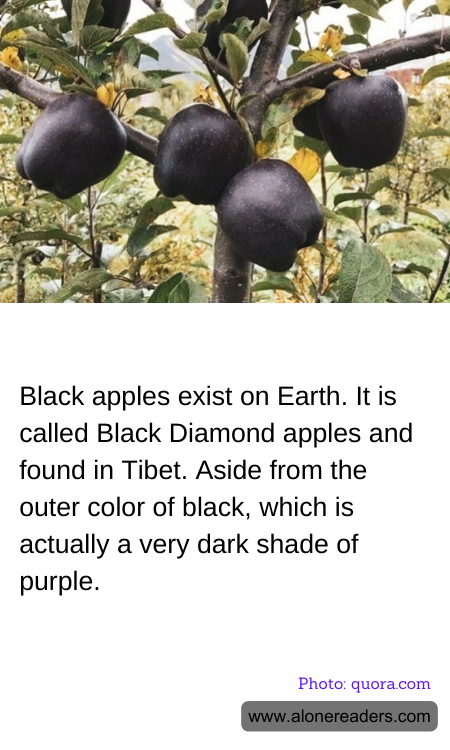
Black Diamond apples are a rare and intriguing variety of apples that hail from the mountainous regions of Tibet. Essentially, they are not truly black but possess a very deep shade of purple that appears black, giving them a unique and mystical appearance. Their distinctive coloration is natural and is mainly attributed to the geographical conditions in which they are grown.
The Black Diamond apple, part of the Hua Niu apple family, which is also known as the Chinese Red Delicious, thrives in the Nyingchi region, located at a high altitude in Tibet. The high altitude, along with the significant temperature fluctuations between night and day, contributes to the apple’s deep, dark color. The ultraviolet light exposure at such altitudes is intense, which stimulates the apple’s skin to develop such a rich, dark hue as a form of natural protection.
Black Diamond apples are not only remarkable for their unusual appearance but also for their taste and texture. They have a sweet, crisp flavor that makes them a favorite among those who manage to acquire them. Because they are not widely commercialized and require specific growing conditions, these apples are quite rare and are considered a luxury item. They are mostly sold in high-end supermarkets in Asian cities and are sought after by fruit connoisseurs and adventurous eaters alike.
Growing Black Diamond apples is a demanding process, requiring careful attention to ensure the ideal growth conditions are maintained. The scarcity of these apples is also due to the fact that they take longer to mature than many other apple varieties. Generally, they are harvested at the end of October, which means they spend a significant amount of time on their trees, allowing them to develop their full flavor and signature dark coating.
Because of their rarity and striking appearance, Black Diamond apples are a topic of intrigue and curiosity among many. Despite their limited availability, they continue to fascinate people around the world, embodying a perfect blend of nature’s artistry and the agricultural heritage of Tibet.
