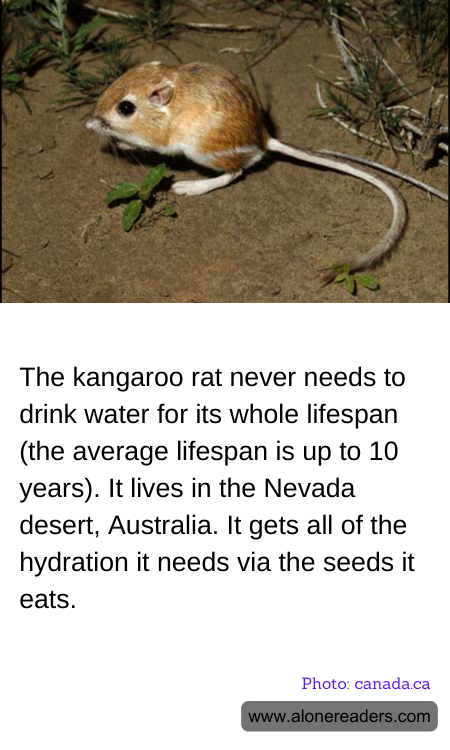
The kangaroo rat, a remarkable creature native to desert environments such as those found in parts of North America, has adapted extraordinarily to its harsh surroundings. Contrary to the common assumption, the kangaroo rat does not inhabit Australia but is primarily found in arid regions of the United States. One of the most fascinating aspects of this small rodent is its ability to live its entire life, which can span up to 10 years, without ever drinking water.
This incredible feat is made possible through a series of sophisticated physiological adaptations that enable the kangaroo rat to maximize water conservation. The primary source of their hydration is the seeds they consume. These seeds are not just their food source but also their main water reservoir. Metabolic water is produced internally through the digestion process of these seeds. Interestingly, the efficiency of this process is so high in kangaroo rats that they do not require any additional water.
Moreover, kangaroo rats have highly efficient kidneys which significantly minimize water loss, further enabling them to thrive in their dry environments. Their bodies are so adept at conserving water that even their excretions are minimal and highly concentrated, losing very little moisture. Additionally, they are nocturnal creatures, which means they are active during the night and rest in their burrows during the hot daytime, thus avoiding exposure to the searing sun which would increase their need for hydration.
These behavioral and physiological adaptations make the kangaroo rat a master of desert survival, demonstrating a phenomenal example of evolutionary adaptation to extreme environments. Their ability to sustain themselves on metabolic water alone, avoiding dependency on scarce water resources, underscores an incredible ecological niche and highlights the remarkable interplay between biology and environment.
