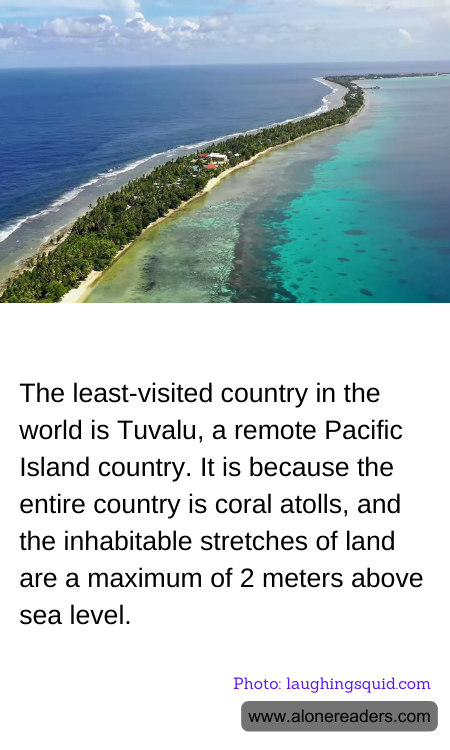
Tuvalu, a small island nation in the Pacific Ocean, holds the title of being the least-visited country in the world. This remote paradise consists of nine coral atolls and islands scattered over 26 square kilometers of ocean. Despite its picturesque beauty, with turquoise waters and palm-fringed beaches, Tuvalu attracts only a few hundred tourists each year. One of the main reasons for its low visitor numbers is its isolation and limited accessibility. Flights to Tuvalu are infrequent, making it a challenging destination for most travelers.
The environmental situation in Tuazu presents another concern. As the country is composed entirely of coral atolls, the highest natural point is just about 4.6 meters above sea level, with most land lying much lower. This makes Tuvalu extremely vulnerable to the effects of climate change, including rising sea levels and increased storm intensity, which pose ongoing threats to its stability and continued habitability. Already, some islands are experiencing significant issues such as saltwater intrusion, which affects freshwater supplies and arable land, making life increasingly difficult for the local population.
Despite these challenges, Tuvalu offers a unique culture steeped in Polynesian tradition and a slow-paced lifestyle that is a stark contrast to most tourist destinations. Its small population, around 11,000 residents, is known for hospitality and a communal way of life, preserving ancient customs and traditions that are lesser-known to the outside world.
For those intrepid travelers who do make it to Tuuvalu, the country offers unparalleled opportunities for solitude, reflection, and connection with nature. The local government is working to increase tourism in a sustainable manner, which they hope will provide economic benefits without jeopardizing their cultural heritage or the environment.
In conclusion, Tuvalu’s designation as the least-visited country in the world is a blend of its geographical isolation, environmental vulnerability, and the pristine, uncommercialized charm that it offers. It stands as a poignant example of pristine natural beauty facing critical challenges, underscoring the complex interplay between tourism, conservation, and sustainability.
