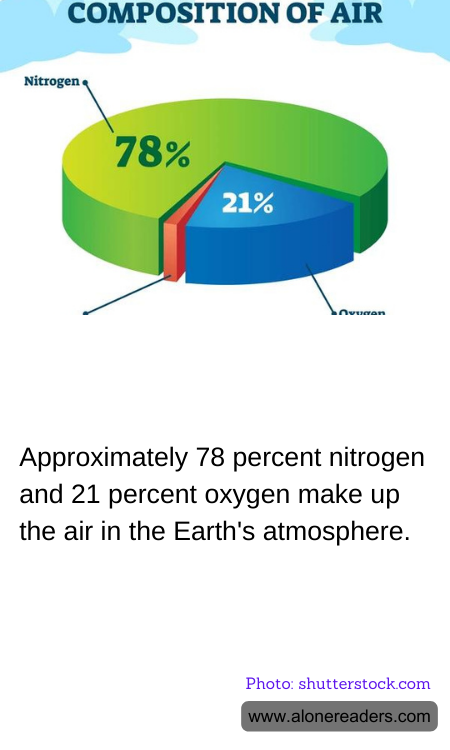
The air we breathe is a complex mixture, primarily composed of nitrogen and oxygen, which together account for about 99 percent of the atmosphere's volume. Specifically, approximately 78 percent of the atmosphere is nitrogen, while oxygen makes up about 21 percent. This composition plays a crucial role in sustaining life on Earth and has significant implications for both biological and environmental processes.
Nitrogen, the predominant component, is essential for the growth and function of living organisms. It is a vital element in amino acids, proteins, and DNA, all of which are fundamental to biological functions and structures. Despite its abundance in the atmosphere, nitrogen is not directly usable by most organisms until it is converted into a reactive form through natural processes like nitrogen fixation. This process is primarily facilitated by certain bacteria and by human-made processes used in agriculture, which convert atmospheric nitrogen into forms that plants and animals can readily consume.
Oxygen, on the other hand, is critical for respiration in aerobic organisms, including humans. It is involved in the process of converting nutrients into usable energy, which is essential for metabolic processes. Oxygen is also involved in various geological and chemical processes that shape the Earth, such as oxidation reactions and weathering.
Besides nitrogen and oxygen, the atmosphere contains small amounts of other gases, such as argon, carbon dioxide, and trace levels of neon, helium, methane, krypton, and hydrogen. These components, although present in much smaller quantities, are instrumental in various chemical reactions and physical processes within the atmosphere. For example, carbon dioxide plays a pivotal role in photosynthesis and acts as a greenhouse gas, trapping heat in the atmosphere and influencing global climate.
The stability of the atmosphere's composition is crucial for climate regulation, weather patterns, and the overall health of Earth’s ecosystems. However, human activities, particularly the burning of fossil fuels and deforestation, are altering the atmospheric concentrations of many gases, including carbon dioxide and methane. These changes contribute to air pollution and climate change, posing challenges for environmental sustainability and public health.
Understanding the composition and dynamics of Earth’s atmosphere is essential for developing strategies to manage and mitigate the impacts of human activities on the environment. It also aids in predicting and preparing for changes in climate that affect all forms of life on Earth. As the scientific community continues to explore and understand these complex interactions, the vital balance of nitrogen and oxygen remains a core focus in the quest to preserve our planet’s health and diversity.
