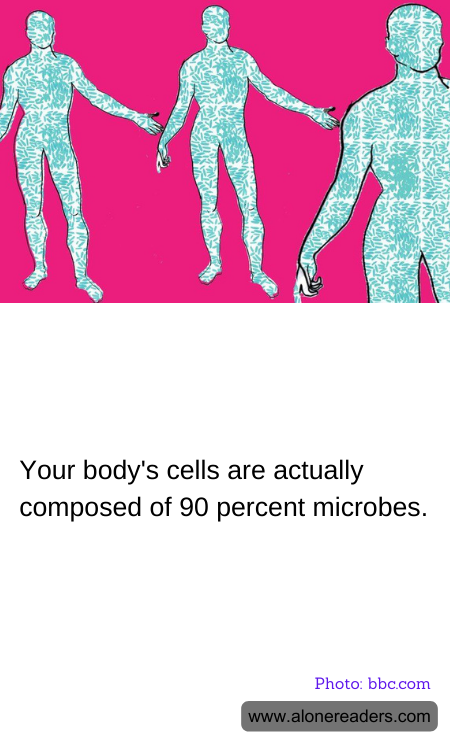
The statement that "your body’s cells are actually composed of 90 percent microbes" is a common misconception derived from misunderstandings about the human microbiome. It’s an exaggeration to say that our body cells are made up of microbes. Instead, it’s more accurate to discuss the relationship between human cells and microbial cells in terms of population and importance.
Humans are indeed hosts to vast numbers of microorganisms, including bacteria, fungi, viruses, and archaea. These microbes exist predominantly on the skin, in the gut, and on other body surfaces. The human microbiome is essential for many processes critical to our health, such as digestion, production of vitamins, and immune system function.
Research initially suggested that microbial cells outnumber human cells in the body by about 10 to 1. However, more recent studies have updated this ratio to approximately 1:1. That means, for every human cell, there is about one microbial cell, a balance that fluctuates with changes in an individual's diet, health, and environment.
Moreover, these microbial cells are much smaller than human cells, so they do not make up the majority of the body’s mass or cell volume. In terms of cell count, they are approximately equal, but they constitute only about 1 to 3 percent of the body’s total mass.
Therefore, while it is not accurate to say our cells are mostly microbes, it is crucial to recognize the significant impact and contribution of the microbiome on human health and disease. The interactions between human cells and microbial cells are complex and symbiotic, with ongoing research increasingly highlighting how this relationship influences everything from metabolism and immune function to behavior and predispositions to disease. Understanding this dynamic is critical for the development of medical treatments and preventive measures in the future.
