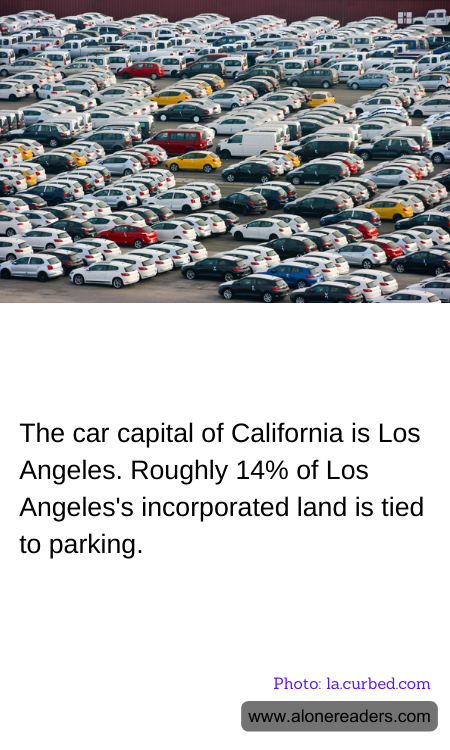
Los Angeles has long been synonymous with car culture, earning it the moniker of the car capital of California. The city's sprawling landscape, coupled with a historical lack of robust public transportation options, has made personal vehicles a necessity for most residents. This deep-rooted automobile dependency is evident in the city's layout, where an astonishing 14% of its incorporated land is dedicated to parking. This includes public parking lots, private garages, and street parking, emphasizing the significant space allocated to accommodate the vast number of cars.
The impact of this car-centric urban design is multifaceted. Economically, vast areas allocated for parking could potentially be used for housing or commercial development, potentially generating higher economic returns. Environmentally, the emphasis on car transportation contributes significantly to air pollution and carbon emissions. Los Angeles frequently faces criticism for its smog and poor air quality, largely attributable to vehicle emissions. Additionally, the urban sprawl encourages longer commutes, which further exacerbates these environmental issues.
Socially, the necessity to own a car in Los Angeles can be a significant barrier for low-income families, impacting their accessibility to work and essential services. The city's public transport infrastructure, although improving, still does not offer the comprehensive coverage seen in more transit-oriented cities like New York or San Francisco. This situation perpetuates inequality, as those who cannot afford a car are also those most likely to be disadvantaged by inadequate public transit options.
Efforts are ongoing to address these challenges. Los Angeles has been investing in public transportation projects, such as the expansion of the Metro Rail system, and promoting sustainable transportation options like biking and car sharing. Urban planners and city officials are increasingly recognizing the need to reduce dependency on cars and reclaim spaces currently devoted to parking for more community-friendly uses.
In conclusion, while Los Angeles continues to live up to its reputation as the car capital of California, there is a growing awareness and effort to reshape its identity. By reducing the city’s dependence on automobiles and rethinking the allocation of its land, Los Angeles can address the environmental, economic, and social challenges that come with being the car capital. The transformation from a car-centric to a more transit-oriented city may not only improve the quality of life for its residents but also set a precedent for other cities facing similar issues around the world.
