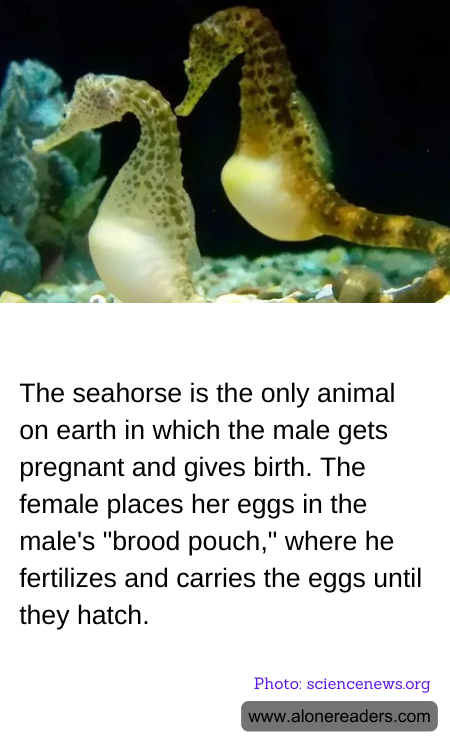
Seahorses are truly unique creatures not only because of their distinct shape and horse-like appearance but also due to their fascinating reproductive behavior. Unlike any other species on Earth, male seahorses take on the role of pregnancy. This unusual reversal of roles is a remarkable phenomenon in the animal kingdom. In the seahorse world, it is the males who are equipped with a brood pouch. During mating, the female seahorse deposits her eggs into this pouch where the male fertilizes them internally.
The male seahorse's brood pouch acts much like a womb in mammals. It provides oxygen and nourishment to the developing embryos and regulates their water salinity, ensuring a perfect balance for growth. The walls of the pouch also produce a placental-like fluid that supplies the embryos with essential nutrients, hormones, and immune molecules, promoting a healthy development. Throughout gestation, the male can carry as few as ten or as many as thousands of eggs, depending on the species.
After a gestation period which can last from 10 days to 6 weeks, depending largely on the species and water temperature, the male seahorse experiences muscular contractions to expel the fully formed, miniature seahorses into the water. These young are independent from birth, receiving no further care and immediately able to fend for themselves. The birth process can be quite taxing for the male seahorse, who typically needs a short recovery period before starting the process all over again.
The role of the male in seahorse reproduction may be evolutionary advantageous. By allowing the males to incubate the young, females can devote more energy to producing eggs, thus potentially enabling more frequent reproduction and maximizing reproductive output. This role reversal also lessens the risk of predation on pregnant females that might be slower and more vulnerable, thereby indirectly protecting the next generation.
Nevertheless, despite their fascinating reproductive system, seahorses face significant threats from habitat loss, pollution, and especially the traditional medicine trade, where they are harvested in large numbers. These factors have contributed to declining populations worldwide, making conservation efforts crucial to ensure that these extraordinary creatures do not disappear from the ocean's diverse tapestry. Their unique mode of reproduction, among other fascinating qualities, makes seahorses an important species for marine biodiversity and highlights the need for ongoing research and protective measures in marine conservation.
