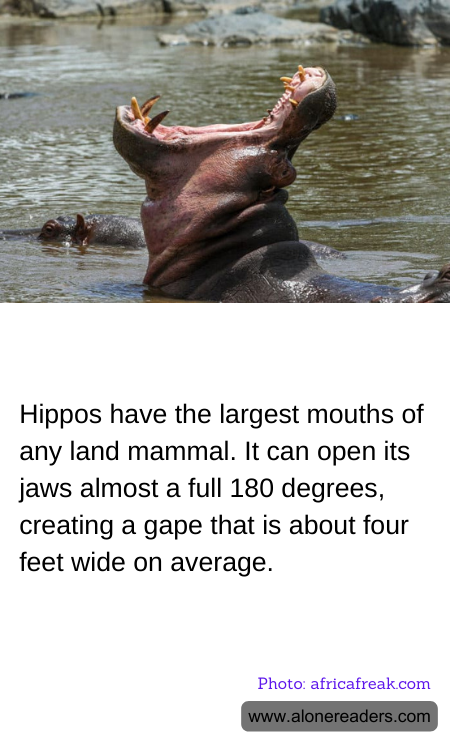
Hippos, or hippopotamuses, are truly unique within the animal kingdom, not only due to their colossal size but also because of their extraordinary mouths, the largest of any land mammal. With the ability to open their jaws nearly 180 degrees, these giants can create a mouth gape averaging about four feet wide. This impressive jaw-opening capability serves multiple purposes in the daily life of a hippo.
The large mouth of a hippo plays a vital role in their feeding habits. Although primarily herbivorous, consuming mostly grass, the size of their mouths allows them to take in large amounts of food quickly, an advantage especially important in the wild, where grazing time can compete with the need to stay cool and avoid predators. When submerged, hippos also use their mouths to "graze" on aquatic plants, sweeping their large heads from side to-side beneath the water.
Apart from feeding, the hippo's sizable mouth is crucial for social interactions and defense. Hippos are known for being highly territorial and aggressive. When threatened or during disputes over territory, they often exhibit a behavior known as "gaping" where they open their mouths wide to display their large, formidable teeth. This display serves as a warning and can be a critical factor in deterring rivals or predators. The force of their bite is incredibly powerful, capable of crushing a crocodile, making this defensive tactic very effective.
Moreover, the hippo's massive mouth and teeth play a central role in mating rituals. Male hippos, in particular, use their large teeth to fight with other males as they vie for dominance and the attention of females during the breeding season. These battles can be intense, with males using their teeth to inflict wounds on their opponents, further underscoring the importance of their large mouths and strong jaws.
Despite their dangerous reputation, hippos are fascinating creatures that play a significant role in their ecosystems, particularly in African rivers and lakes. Their paths through vegetation promote plant growth and their dung provides essential nutrients to both terrestrial and aquatic ecosystems. The hippo's large mouth, therefore, is not just a physical feature but a crucial element of its survival and interaction with the environment, showing the complex relationship between anatomy and adaptation in the animal kingdom.
