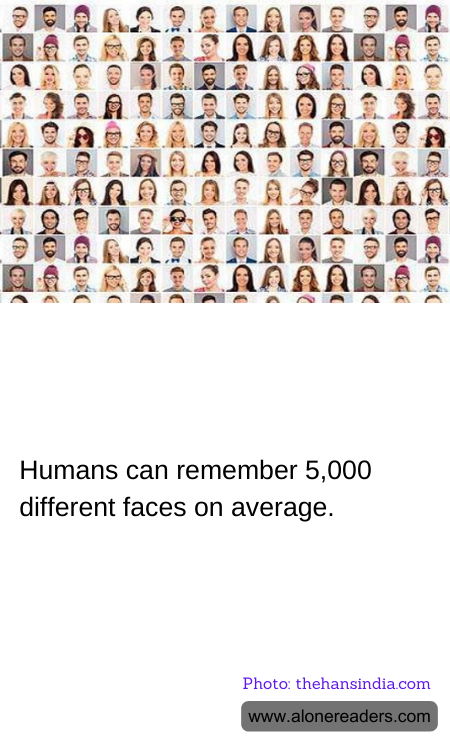
Human beings are incredibly adept at recognizing and remembering faces. Research suggests that the average person can remember around 5,000 different faces throughout their lifetime. This fascinating ability is rooted in the brain's specialized mechanisms dedicated to face perception, primarily located in the fusiform gyrus, which is part of the temporal lobe.
Face recognition is crucial for social interaction, allowing individuals to distinguish between familiar and unfamiliar people, and interpret various emotional states. Unlike other objects, faces are recognized holistically; this means that we perceive a face as a whole, rather than focusing on individual features. This holistic processing is what enables the rapid and efficient recognition of the faces that we encounter in our daily lives.
The number of faces a person can remember can vary significantly from one individual to another, influenced by various factors including social exposure, memory skills, and even professional needs. For example, a teacher or a public figure might develop a higher capacity to remember faces due to the nature of their work.
Recent studies have explored whether this ability can be improved with training. While everyone has a general capacity to recognize and remember faces, training can enhance this ability, enabling people to remember more faces with greater accuracy. This can be particularly useful in professions where face recognition is a critical part of the job, such as in law enforcement or customer service.
Interestingly, while most people can recognize and remember thousands of different faces, the flip side of this ability is the phenomenon known as 'face blindness' or prosopagnosia. People with this condition struggle to recognize even the most familiar faces, including their own. This illustrates just how specialized and crucial the face-recognition system is in our brains.
Despite the ability to recognize and remember a multitude of faces, social and emotional connections play a significant role in how well and how long we remember a face. Faces tied to emotional memories are more likely to be retained over those that do not evoke any feeling. This interconnection between memory, emotion, and face recognition highlights the complexity of the human brain and underscores the importance of faces in our social lives.
