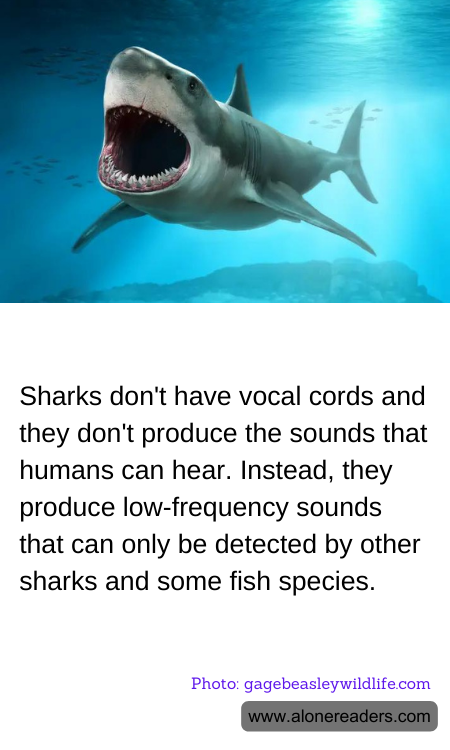
Sharks are often portrayed in popular media as fearsome predators, but one lesser-known aspect of their biology is their communication methods. Unlike many marine animals, sharks do not use vocal cords to communicate. Within the animal kingdom, especially among mammals and birds, the use of vocal cords to produce sounds is prevalent, assisting in everything from attracting a mate to warning of danger. However, sharks have evolved a different method.
These majestic underwater creatures rely on low-frequency sounds for communication, which are beyond the range of human hearing. These sounds are typically produced by the movement of their bodies, such as when swimming or interacting with the environment, rather than through an organ specifically designed for sound production. This type of communication is crucial in the vast and often murky ocean waters where visibility is low. For sharks, sound can travel faster and further in water compared to light, making it an effective means for conveying messages.
Intriguingly, not all species of sharks use the same communication techniques, and some may rely more heavily on body language, or the emission of chemical signals known as pheromones. However, those species that do use low-frequency sounds can send signals to each other and certain fish species that are sensitive to these frequencies. This capability allows them to coordinate with one another possibly for hunting, mating, or navigating through the complex structures of coral reefs or the ocean floor.
The study of shark communication remains a relatively underexploited field. It combines elements of marine biology and acoustic science, and entails significant challenges due to the ocean's vastness and the elusive nature of these creatures. Understanding how sharks communicate not only satiates human curiosity but can also enhance our efforts to conserve these often misunderstood animals. Since they are top predators, sharks play a crucial role in maintaining the health and balance of marine ecosystems. A deeper understanding of their behavior and communication can aid in better management practices for their populations, ensuring their survival and the health of our oceans.
