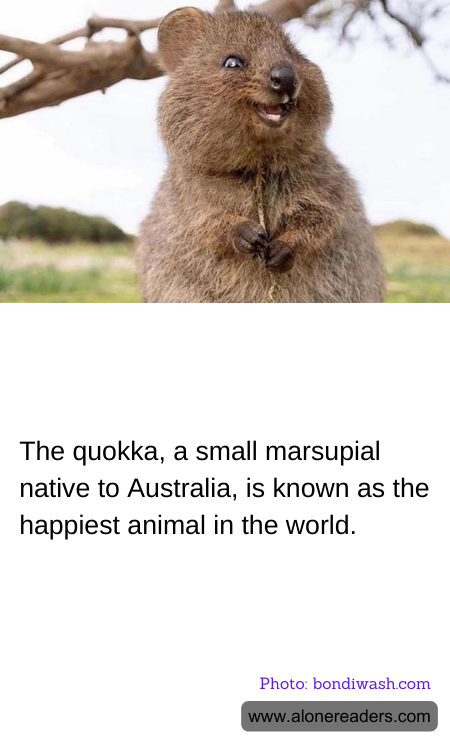
The quokka, a small marsupial from the Rottnest Island off the coast of Western Australia, has earned the reputation of being the happiest animal in the world. This adorable creature, about the size of a domestic cat, has a naturally friendly and curious nature, which it combines with a seemingly perpetual smile. This distinctive expression has made the quokka a popular subject of selfies and social media posts, raising its global profile incredibly.
Characteristically, the quokka is part of the wallaby family and has adapted to a variety of habitats on the small islands it inhabits. Its diet primarily consists of grasses, leaves, and small plants. Remarkably resilient, the quokka can survive in an environment with limited fresh water by extracting moisture from its food. Their ability to live off a relatively meager diet has allowed quokkas to thrive in the rugged terrain of Rottnest Island and a few other smaller islands along the coast.
Despite its friendly demeanor, the quokka faces several threats. Their status as a vulnerable species comes from their limited distribution and the destruction of their natural habitat. Predators such as foxes and cats, along with human interference, have also contributed to their declining numbers on the mainland. Conservation efforts are now crucial to sustaining and increasing their population. These efforts include habitat restoration, predator control, and research into the ecological needs of the species.
Surprisingly, the quokka's sociability might play a role in its survival, attracting tourism that supports conservation funding and awareness. Visitors to Rottnest Island often seek a glimpse of the quokka, and local policies such as fines for feeding and disturbing the animals help ensure their safety. The charm of the quokka continues to spur positive economic and ecological impacts on their habitat.
In conclusion, while famous for their cheerful demeanor, the survival of quokkas depends heavily on continued conservation efforts and responsible tourism. Protecting these happy creatures ensures that future generations might too enjoy a quokka selfie, contributing to both the local economy and the global conversation on wildlife conservation.
