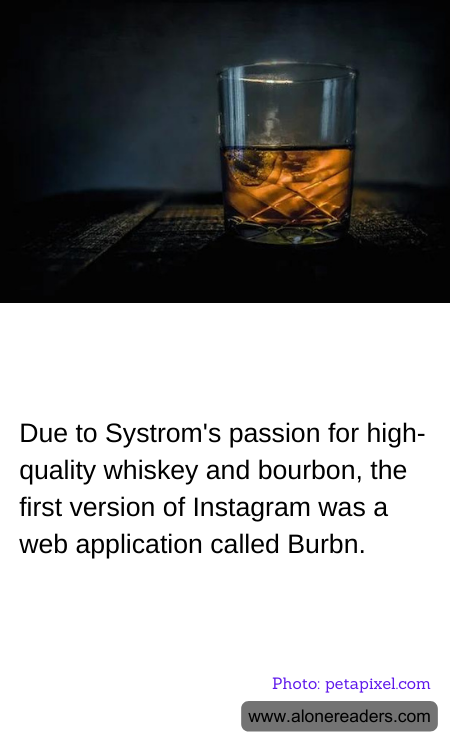
In the whirlwind evolution of social media applications, few stories are as intriguing as the origin of Instagram, a titan in the realm of online photo sharing. Before Instagram became the cultural phenomenon it is today, Kevin Systrom, its co-founder, initially embarked on a different path with an app called Burbn. Named after Systrom’s favorite spirit, bourbon whiskey, Burbn exemplified his penchant for high-quality drinks and served as an homage to his personal tastes.
Burbn, however, was not the sleek photo-sharing service we know today. It was developed as a web-based application primarily focused on location-based check-ins, much like Foursquare, but also incorporated features for plan making and photo sharing. The idea was to create a social network that would enable users to share their experiences through photos, alongside other activities like checking into locations, earning points for hanging out with friends, posting future plans, and much more.
Despite its novel features, Burbn struggled to gain traction. The app was overly complicated, packed with too many features that diluted its core functionality. Recognizing this, Systrom and his co-founder, Mike Krieger, decided to pivot. They took what they believed was the most compelling aspect of Burbn — the photo-sharing element — and used it as the cornerstone for a new app. This shift in focus led to the creation of Instagram. By stripping down Burbn’s excess features and honing in on a simple, easy-to-use interface for photo sharing, filtering, and social interaction, Instagram quickly caught public interest.
Launched in October 2010, Instagram's popularity skyrocketed, fundamentally changing the landscape of social media. Its success underscored the importance of simplicity in app design and sharply focused functionality. The journey from Burbn to Instagram highlights a critical lesson in the tech industry: innovations don’t have to start perfectly. Often, a willingness to adapt and refine an initial concept can lead to something groundbreaking, much like Systrom’s initial foray into app development transformed into a global platform uniting millions through visual storytelling.
