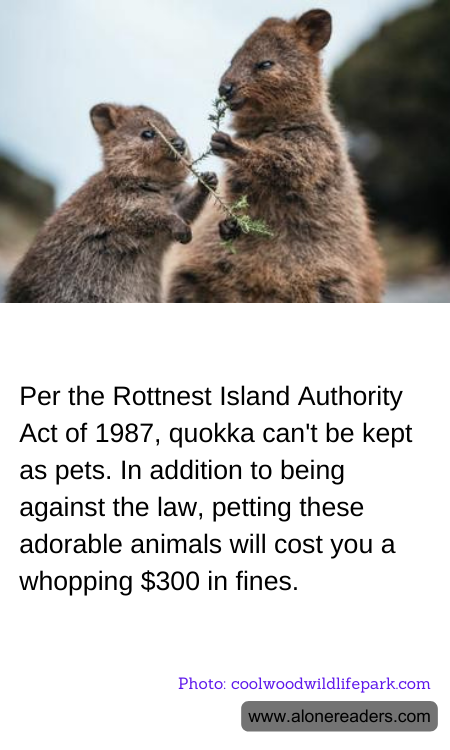
Quokka, often known as the "world's happiest animal," has captured the hearts of people worldwide, often seen in selfies due to their remarkably friendly and approachable demeanor. However, despite their adorable appearance, the laws governing their protection are stringent. The Rottnest Island Authority Act of 1987 explicitly prohibits keeping quokkas as pets. This legislation is a protective measure, designed to safeguard the species from exploitation and ensure their survival in their natural habitat.
Rottnest Island, located off the coast of Western Australia, is the primary habitat for the quokka. This small marsupial is native to the region and has adapted to the unique environmental conditions of the island. The act serves as a crucial barrier against the domestication of these wild animals, which could be detrimental to their health and to the ecological balance of the island. Quokkas require specific dietary and environmental conditions that are difficult to replicate in a domestic setting, and interactions with humans can lead to stress and potential health risks for the animals.
The enforcement of the law is strict; fines for petting or attempting to keep quokkas as pets can reach up to $300. This hefty penalty underscores the seriousness with which local authorities treat the preservation of quokka populations. The fine also acts as a deterrent, discouraging tourists and residents alike from disturbing or capturing these creatures.
Conservation efforts on Rottnest Island are robust, with numerous initiatives aimed at protecting the quokkas' natural environment and ensuring their population remains stable. Researchers and conservationists monitor the species, tracking their health and numbers to mitigate any possible threats. Public education campaigns also play a vital role in quokka conservation, informing visitors of the importance of observing wildlife from a respectful distance and adhering to the regulations set forth by the Rottnest Island Authority.
Given their vulnerable status and the environmental challenges they face, such as habitat loss and climate change, quokkas are more than just a cute face in the animal kingdom. They are a symbol of Australian wildlife conservation and an important subject of scientific study. By respecting the laws designed to protect them, both locals and tourists can help ensure that future generations will also be able to enjoy the presence of these charming marsupials. Thus, while it might be tempting to cuddle with a quokka, understanding and respecting their need for protection is essential for their survival and well-being.
