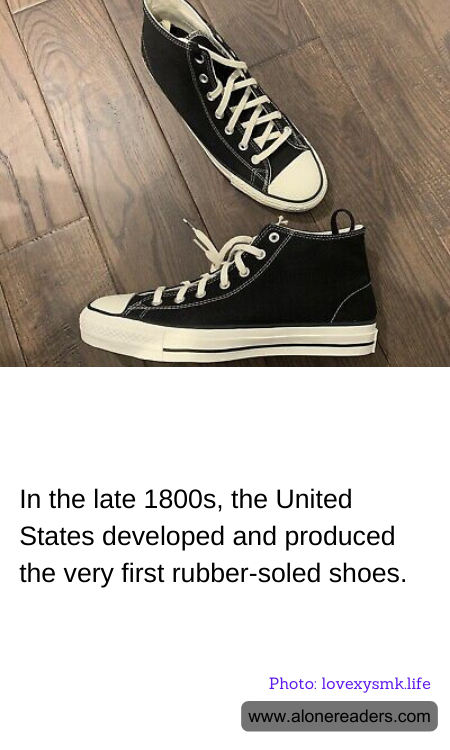
In the late 19th century, the United States marked a significant advancement in the footwear industry with the development and production of the first rubber-soled shoes, fundamentally changing the way shoes were made and used. This innovation was not just a fashion statement but a practical response to the need for more comfortable, durable footwear suitable for the expanding range of physical activities enjoyed by Americans during this period.
Before this period, shoes were primarily made with leather soles, which were sturdy but did not offer much flexibility or cushioning. The introduction of rubber soles was catalyzed by discoveries and enhancements in the processing of rubber—a material that offered remarkable qualities of elasticity, resilience, and resistance to water. The process of vulcanization, developed by Charles Goodyear in 1839, enabled rubber to become more durable and stable, making it an ideal material for various uses including shoe soles.
The first rubber-soled shoes were known as plimsolls and were initially crude in design. These early versions of the modern sneaker were simple canvas shoes with the rubber sole attached; they were primarily worn for activities that required quiet footsteps and flexibility, such as playing sports or onboard ships, garnering the nickname "sneakers" because they allowed wearers to "sneak" around silently.
These shoes gained widespread popularity at the turn of the 20th century, especially among athletes and young people. The convenience and comfort they offered made them a preferred choice not only for sports and recreational activities but eventually for everyday wear. American companies like Keds, which started manufacturing canvas-topped, rubber-soled shoes in 1916, were at the forefront, paving the way for future footwear giants like Nike and Adidas.
Thus, the simple innovation of adding a rubber sole to footwear led to a revolution in the shoe industry, influencing both the manufacture and marketing of shoes. It opened avenues for various sports by providing athletes with better traction and comfort, significantly impacting athletic performance and sports safety. This innovation laid the groundwork for the multi-billion dollar athletic footwear industry we see today, characterized by an ever-evolving array of shoe technologies catering to a wide spectrum of preferences and needs. Over time, this invention has not only permeated all corners of global culture but has also become symbolic of the modern consumer culture, representing both technological progress and fashion trends.
