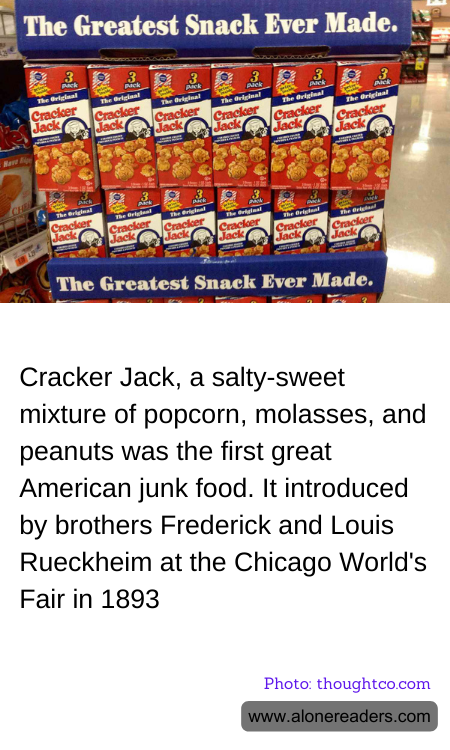
Cracker Jack, the quintessential American snack, owes its origins to a creative burst of culinary innovation by German immigrants, brothers Frederick and Louis Rueckheim. The snack was first introduced at the Chicago World's Fair in 1893, a venue famous for launching new products to an international audience. The blend of popcorn, molasses, and peanuts proved to be a hit, representing a novel take on snack food that perfectly captured the flavors preferred by American palates.
What set Cracker Jack apart from other snacks was not just its unique and addictive flavor but also its innovative marketing strategies. It was one of the first products to be marketed with toys included in the packaging, a practice that began in 1912. This clever technique of including a "prize" inside each box made Cracker Jack not just a snack, but an exciting experience for children and families, catapulting its popularity and making it a staple at ball games, circuses, and other leisure events.
Moreover, the packaging and branding of Cracker Jack played a significant role in its success. The product’s name itself was coined after a salesman sampled the product and exclaimed, “That’s a crackerjack!”—a slang term at the time meaning something of excellent quality. The colorful, memorable logo featuring Sailor Jack and his dog Bingo, introduced in 1918, further cemented the snack in the American cultural psyche and enhanced its appeal across multiple generations.
Around 1896, the Rueckheim brothers developed a method to keep the molasses-coated popcorn kernels separate. This innovation was pivotal, as it significantly improved the product's texture and appeal by preventing the pieces from sticking together. They patented this production method, effectively giving Cracker Jack a significant edge over potential competitors and setting a high standard for similar products.
Cracker Jack has remained popular for over a century, with its integration into American folklore further immortalized by the line “Buy me some peanuts and Cracker Jack” in the 1908 song “Take Me Out to the Ball Game”. This emblematic snack has seen various transformations in production and ownership but continues to be a beloved treat, embodying a rich history of American enterprise and culture. Its continued relevance is a testament to its timeless appeal and the innovative spirit of its creators.
