Blinking is an involuntary act that we often take for as granted, yet it plays a significant role in maintaining not only the health of our eyes but also the optimal functioning of our brain. A blink typically lasts about one-tenth of a second, during which our visual perception takes a brief pause. Surprisingly, these micro-moments are more than just optical necessities; they are also crucial for our cognitive function.
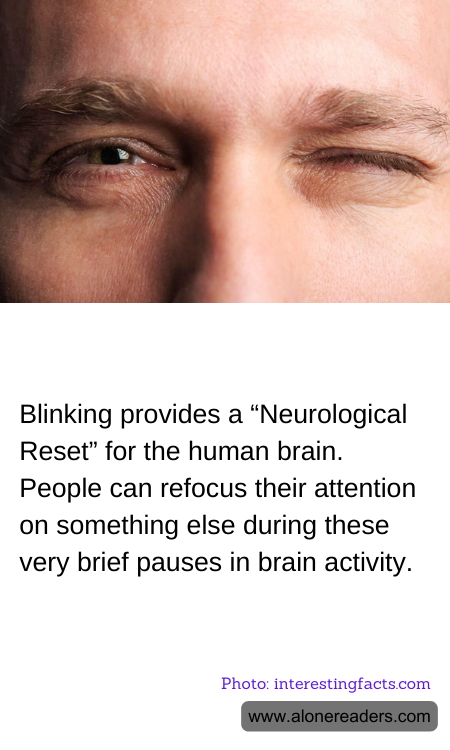
When we blink, our brains are momentarily disengaged from the continuous streams of visual information. This brief interruption is believed to be a form of neurological reset, giving our brain a quick break to enhance focus and attention. It acts similarly to a computer restarting; by briefly going offline, our brains can clear out what's unnecessary and refocus on what's important. This phenomenon can be crucial during prolonged periods of attentional demand, such as reading, driving, or screen time.
Scientific studies have indicated that these blink-induced breaks are linked with the brain regions involved in higher cognitive processes such as awareness, attention, and memory. By blinking, we may be helping our brain to momentarily divert its attention from external stimuli and process information more efficiently. This could be particularly useful for reevaluating our surroundings and refocusing our attention to new details, thereby enhancing our decision-making processes and situational awareness.
In addition to providing cognitive reprieves, blinking also serves to moisten the eyes, which helps prevent dryness and irritation. It cleans and lubricates the eyes by spreading tears over the surface, which can remove any dust or particles that might have settled on the cornea. This is crucial not just for comfort but also for maintaining clear vision, as a stable tear film on the surface of the eye is essential for good optical quality.
However, active engagement in activities that require visual concentration such as reading or using electronic devices reduces the blink rate significantly, which can lead to digital eye strain and fatigue. Thus, understanding the multiple benefits of blinking can encourage us to adopt healthier screen time habits, such as following the 20-20-20 rule — every 20 minutes, take a 20-second break and look at something 20 feet away — effectively resetting our cognitive and visual processes.
The realization that blinking is intertwined with neurological resets reveals another layer of complexity in our understanding of human physiology. Such insights underscore the importance of seemingly trivial bodily functions and recommend a more conscious appreciation and consideration of what blinking can do for our cognitive and visual performance.
