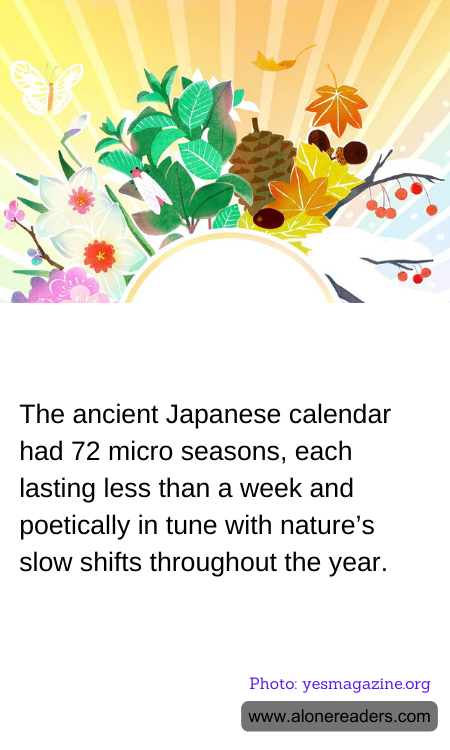
In ancient Japan, the concept of time and nature was finely intertwined, resulting in the creation of a unique calendar system that divided the year into 72 distinct micro seasons. Each micro season lasted approximately five days, reflecting subtle changes in the natural world with poetic precision. This calendar was not just a way to mark time; it was a guide to living in harmony with the rhythm of nature.
The roots of this calendar can be traced back to China, from where it was adapted into Japanese culture. Over time, it became a crucial part of daily life in Japan, influencing agriculture, fishing, and even societal rituals and festivities. The meticulous observation required to identify and categorize these micro seasons is a testament to the deep connection Japanese people had with their environment. Each micro season was given a name that captured the essence of the period, such as "Bush Warblers Start Singing" or "Bamboos Shoot Up."
These poetic names provided cues to farmers on when to plant and harvest crops, and they alerted fishermen to the movements of fish. Culturally, the micro seasons were reflected in the arts, poetry, and the design of kimonos, which could depict specific flowers or scenes relevant to the current micro season. Haiku poetry, in particular, was deeply influenced by this calendar. Poets like Matsuo Basho wrote haikus that encapsulate the essence of the micro seasons, capturing fleeting natural events with concise and vivid imagery.
In contemporary times, while the 72 micro season calendar is not used in daily life as it once was, its legacy persists in the cultural fabric of Japan. Annual festivals often occur around the same times as these traditional seasons, and many Japanese still pay homage to this ancient way of marking time by celebrating the natural changes that occur throughout the year.
This ancient calendar encourages us to slow down and notice the subtle changes in the environment, fostering a greater appreciation for the natural world. In a fast-paced modern society, revisiting this traditional way of understanding time and nature can offer a refreshing perspective on how to live more sustainably and mindfully. Understanding and appreciating these minute changes not only deepens our connection with nature but also enriches our lives culturally and spiritually.
