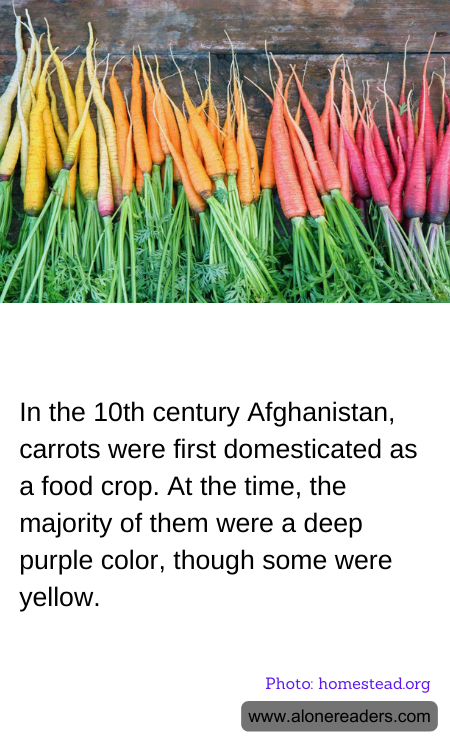
The humble origins of the domesticated carrot trace back to 10th century Afghanistan, a time when the practice of cultivating this now-common vegetable was in its infancy. Unlike the bright orange carrots seen in today’s supermarkets, the carrots of that era mostly displayed a rich, deep purple hue. Some were also yellow, indicating early varietal differences that existed long before modern agricultural practices standardized the carrot's appearance.
The domestication of carrots in Afghanistan marked a significant innovation in agricultural practices. These early farmers selected and cultivated carrot plants that exhibited desirable traits such as size, flavor, and color. Through the process of selective cultivation, farmers in the region were able to propagate plants that not only thrived in the local climate but also appealed to local culinary preferences and dietary needs.
The purple and yellow carrots of 10th century Afghanistan were likely quite different in taste and texture from those we are accustomed to. These early carrots would have been used in a variety of dishes, contributing both flavor and color. In many ways, these colorful roots played a crucial role in the diet of ancient Afghans, providing essential nutrients and variety.
Over the centuries, as trade routes expanded and agricultural practices spread, the genetic diversity of the carrot allowed it to adapt to new environments. This adaptability has resulted in a wide variety of carrot colors, including the now-dominant orange, which was developed in the Netherlands in the 16th century as a tribute to William of Orange.
Today, the legacy of the early Afghan carrots continues as both a dietary staple and a subject of renewed interest among gardeners and chefs alike. The resurgence of heirloom varieties has brought purple and yellow carrots back to tables around the world, celebrated not only for their historical significance but also for their unique flavors and nutritional benefits. Thus, a simple root vegetable from 10th century Afghanistan has traversed the centuries to remain a versatile and valued food source.
