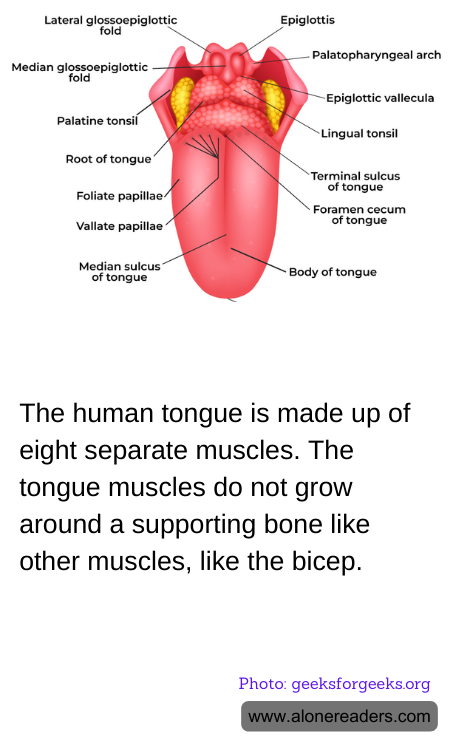
The human tongue is a remarkable organ, boasting a unique composition of eight muscles, unlike any other part of the body. These muscles intertwine to form a flexible and robust structure capable of various movements and functions. Unlike typical skeletal muscles, such as the biceps, which are anchored to bones providing leverage and structural support, the muscles of the tongue are exceptional in that they are not attached to any bones at all. This distinctive arrangement allows the tongue a greater range and freedom of movement.
This extraordinary muscle group is divided into two categories: intrinsic and extrinsic muscles. The intrinsic muscles are located entirely within the tongue and are responsible for altering its shape—helping to perform tasks such as curling the edges of the tongue or flattening it. On the other hand, the extrinsic muscles are attached to external structures like the jaw and the hyoid bone—a small, U-shaped bone situated at the base of the tongue. These muscles primarily control the tongue's position, aiding in critical activities like swallowing, speaking, and chewing.
The versatility and strength of the tongue are facilitated by this intricate muscular makeup, which allows it to change shape and move in complex ways. For instance, when speaking, the tongue works in concert with the teeth, lips, and palate to help form sounds and words by manipulating airflow and shaping mouth movements. Similarly, during eating, the tongue helps move food around for chewing and forms it into a ball (bolus) for swallowing.
Moreover, the tongue plays a crucial role in the sensory system. It is covered with thousands of tiny bumps called papillae, which are home to taste buds that allow us to perceive different tastes like sweet, sour, salty, and bitter. This sense of taste is not only essential for the enjoyment of food but also has a practical aspect, as it helps in evaluating the food's safety and quality.
In conclusion, the human tongue is a complex and dynamic organ, essential for various functions that contribute to our everyday life. Its unique muscular structure, free from skeletal bounds, equips it with an exceptional ability to perform a range of vital tasks, from assisting in speech and altering taste perception to aiding in the digestion process. This fascinating organ continues to be a significant area of study within both medical and scientific communities, underscoring its importance and complexity.
