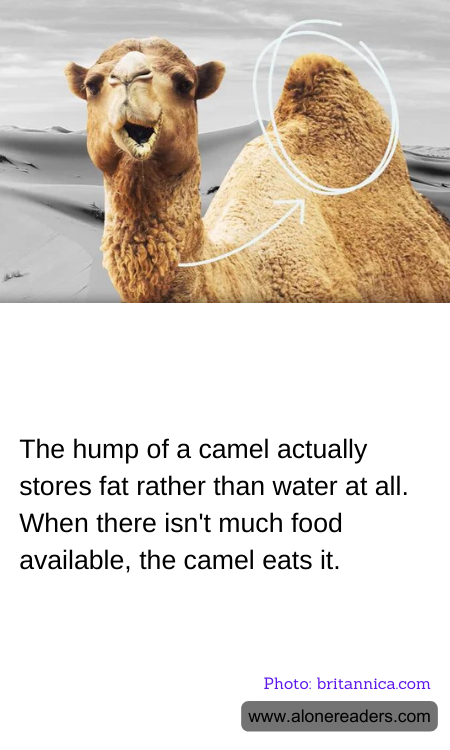
Contrary to popular belief, the hump of a camel is not a reservoir for storing water. Instead, it functions as a storage site for fat. This adaptation is crucial for the camel's survival in harsh desert environments, where food and water are scarce. The fat stored in the hump can be metabolized into water and energy when sustenance is not available. This unique feature allows camels to travel long distances and endure extreme conditions without needing frequent food and water intake.
The hump is essentially a mound of fatty tissue. When a camel consumes a sufficient amount of food, its body converts the excess nutrients into fat, which is deposited in the hump. Interestingly, a well-fed camel will have a firm and upright hump, but as the fat reserves are used up, the hump can become flabby and droop down.
The metabolic process of converting fat into water is vital for the camel’s survival. This biochemical reaction within the camel's body generates water as a byproduct of fat breakdown. This endogenously produced water, along with the ability to tolerate large changes in body temperature and water content, enables camels to go for days or even weeks without drinking. This incredible water efficiency is compounded by the camel's ability to drink up to 40 gallons of water at one time and its urine which is highly concentrated to minimize water loss.
The design of a camel's hump represents a remarkable evolutionary adaptation to life in arid environments. It exemplifies nature's ingenuity in designing organisms that are well-suited to their surroundings. Not only does the hump allow the camel to function autonomously from immediate food and water sources, but it also serves as an insulating layer and a shade provider protecting from the intense desert heat. Thus, the camel's hump is a perfect example of how animals adapt their anatomy and physiology to meet ecological challenges and thrive in their respective habitats.
