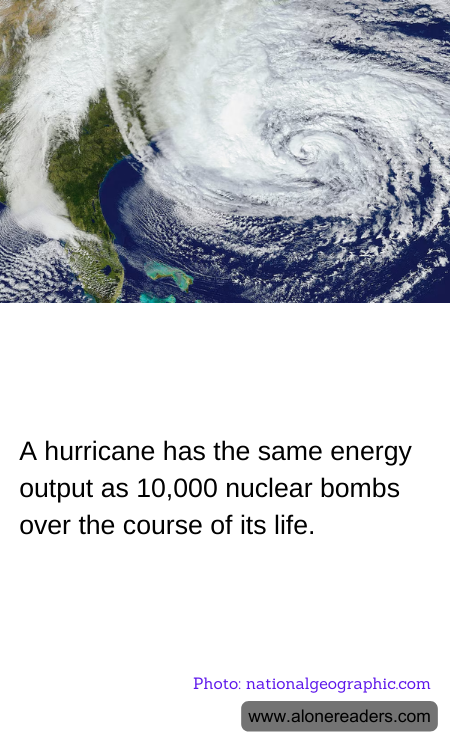
Hurricanes are among the most powerful natural phenomena on Earth, demonstrating immense energy output during their lifecycle. To put it in perspective, the energy released by a single hurricane can be equated to the explosion of 10,000 nuclear bombs. This staggering comparison highlights not only the intensity but also the massive scale of these storms.
The energy of a hurricane originates from the warm ocean waters, particularly in tropical regions. When the surface water exceeds about 26 degrees Celsius, it heats the air above it, causing the air to rise rapidly. As this moist air rises, it cools and condenses to form storm clouds and rain. The condensation releases heat, known as latent heat, which warms the surrounding air, causing it to rise faster and reinforcing the cycle. This process, in turn, generates powerful winds and torrential rainfalls typically associated with hurricanes.
The energy release mechanism of hurricanes is immensely efficient, extracting heat from the ocean surface and converting it to kinetic energy—the energy of the moving winds at an incredibly high rate. This kinetic energy accounts for only a fraction of the heat released from the water; most of it is transported upwards, which can influence cloud formation and intensification of the storm. As such, hurricanes can be seen as massive heat engines, driven by the temperature differences between the ocean surface and the atmosphere.
As hurricanes traverse the ocean, their paths and intensity can be affected by various factors including sea surface temperatures, atmospheric conditions, and underlying currents. This interplay of factors makes predicting the exact strength and path of hurricanes a complex task for meteorologists. Unfortunately, with rising global temperatures, there is scientific consensus that the intensity of hurricanes could increase, leading to more frequent mega-storms capable of unprecedented destruction.
The immense energy associated with hurricanes is a testament to the dynamic and powerful forces of nature. The comparison to nuclear bombs, while illustrative of their energy output, also serves as a stark reminder of their potential for destruction. Therefore, understanding the nature and behavior of hurricanes is crucial for preparedness and mitigation strategies, aiming to minimize the damage and protect vulnerable communities from their devastating impacts.
