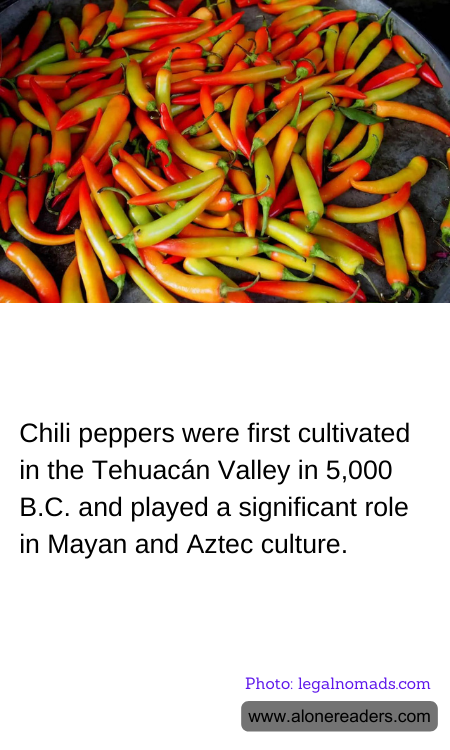
Chili peppers, with their fiery heat and bold flavors, have a rich history that traces back to the Tehuacán Valley where they were first cultivated around 5,000 B.C. This region, part of present-day Mexico, provided the perfect conditions for the flourishing of this potent plant, which quickly became a staple in the diets and cultures of various ancient civilizations, including the Mayans and Aztecs.
For these early Mesoamerican peoples, chili peppers were more than just a food item; they held significant cultural, medicinal, and even spiritual importance. The Mayans used chilies in various aspects of their daily lives, incorporating them into their cooking for flavor and their medicinal practices to relieve pain and improve health. The Mayan chocolate drink, known to be a luxurious blend of cacao and spices, included chili peppers for an extra kick. This connection to both nourishment and medicine made the chili pepper a powerful symbol in Mayan culture, representing both fire and life.
The Aztecs, too, revered chili peppers, but their uses extended even further into their economic systems and religious ceremonies. Chili peppers were used as a form of tribute or tax, showcasing their value in the Aztec economy. In terms of cuisine, the Aztecs developed numerous ways to incorporate chilies into their food, contributing to what would become a hallmark of traditional Mexican cuisine. Furthermore, they believed chili peppers had the power to both heal and provide protection against evil spirits. During certain rituals, they were burned as offerings to the gods, with the rising smoke thought to convey the prayers of the faithful.
The importance and widespread use of chili peppers by the Mayans and Aztecs laid a firm foundation for the role peppers would play in cuisines around the world. After the Columbian Exchange, chili peppers were introduced to new cultures and continents, where they were eagerly adopted and adapted into various culinary traditions, demonstrating their versatile appeal and enduring popularity.
Today, the legacy of chili peppers remains vibrant, with their influence seen in the fiery cuisines of countries such as India, Thailand, and Korea. Meanwhile, in Mexico, chili peppers continue to dominate local flavors and inspire modern chefs and food enthusiasts around the world, just as they did thousands of years ago in the Tehuacán Valley.
