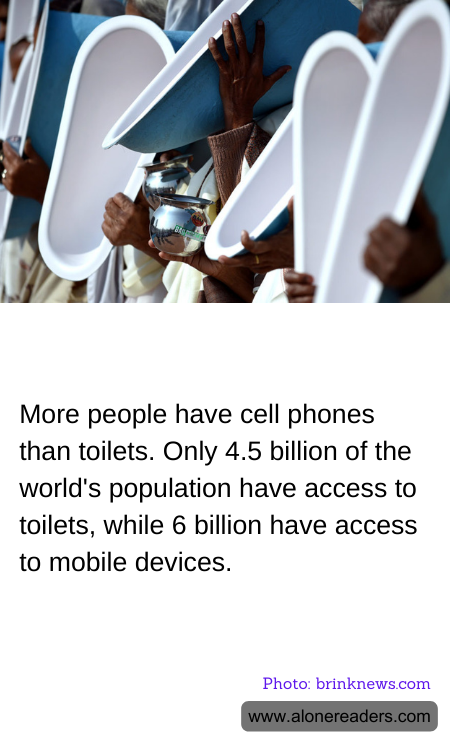
In today's global landscape, a striking contrast exists between the accessibility of modern technology and basic sanitation: more people around the world have access to cell phones than to toilets. This disparity highlights significant issues in global priorities and development, where technology seemingly leaps ahead of fundamental human needs. While approximately 6 billion people have access to mobile phones, only about 4.5 billion can access proper sanitation facilities such as toilets. This gap underscores a crucial imbalance that affects health, dignity, and economic development.
The widespread availability and adoption of mobile technology have transformed societies, driving connectivity and access to information in unprecedented ways. Mobile devices have become central to both personal lives and economic activities, offering new opportunities for learning, business, and social interaction. In contrast, the lag in sanitation infrastructure poses severe public health risks, as inadequate waste disposal and poor hygiene contribute to the spread of infectious diseases, such as cholaceous and other gastrointestinal disorders.
This imbalance is not merely a reflection of technological advancement but also of global economic inequalities and policy priorities. Regions most affected by poor sanitation are often those with the least economic development, where investment in infrastructure tends to be overlooked or unable to keep pace with population growth. Moreover, the lack of toilets and proper sanitation facilities severely impacts the quality of life, particularly affecting women and children who are at greater risk of diseases and often face safety concerns due to the absence of private and hygienic sanitation facilities.
Addressing this incongruity requires a concerted effort from governments, international organizations, and civil society to reassess priorities and channel more resources into sanitation infrastructure. Beyond the moral imperative of ensuring that every individual has access to a toilet, there are compelling economic reasons to invest in sanitation. Studies have shown that every dollar spent on sanitation brings a five-fold return in lower health costs, increased productivity, and fewer premature deaths.
Moreover, the drive to increase access to toilets and improve sanitation can benefit from the very technological prowess that has put mobile phones in so many hands. Innovations such as mobile applications for health monitoring, the use of mobile data to track and predict disease outbreaks, and mobile payments to fund sanitation services can bridge the gap between technology and basic needs. Integrating technologies can streamline efforts and yield solutions that are both effective and sustainable, ensuring that strides in technology go hand in hand with advancements in health and wellbeing.
