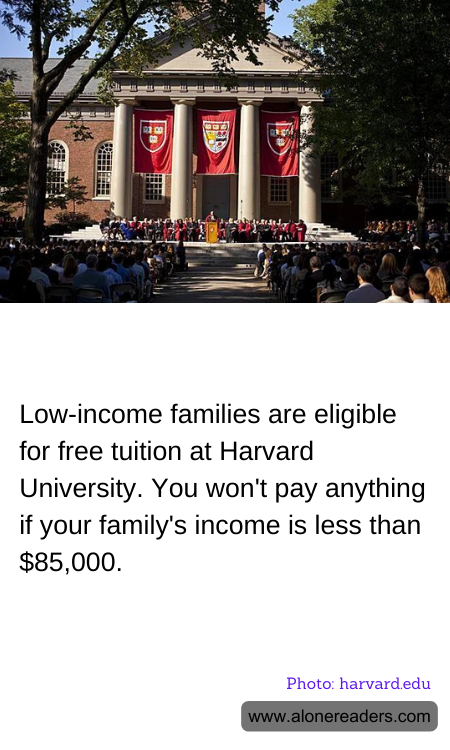
Harvard University, one of the leading educational institutions worldwide, has long been committed to making education accessible to all, irrespective of their financial background. This initiative is part of Harvard's financial aid program, designed to enroll the most talented students, regardless of their economic circumstances. Families who earn less than $85,000 a year qualify for this remarkable opportunity, ensuring that their financial constraints do not hinder their academic aspirations.
The structure of this financial aid program allows students from low-income families to attend Harvard without the burden of tuition fees. What this effectively means is that if the family income falls under the specified threshold, the student's tuition is completely covered by the university’s financial aid resources. This effort not only opens up a realm of possibilities for underprivileged students but also enriching the Harvard community by fostering a diverse student body.
The financial aid provided doesn’t stop at just free tuition. It also typically includes other costs associated with college life, such as room and board, books and personal expenses, which are often covered through additional grants. This comprehensive support system ensures that students can focus on their studies and personal development without worrying about financial barriers.
Moreover, Harvard’s admission process remains need-blind for all students, including international applicants, emphasizing the university's dedication to inclusivity. A need-blind admission process means that a candidate's financial situation is not considered when deciding on their application for admission. This policy ensures that all talented and driven students have a fair shot at attending, regardless of their economic background.
By providing such substantial financial aid, Harvard aims to lead by example, encouraging other institutions to adopt similar policies to make higher education truly universal and accessible. It stands as a powerful statement against the socioeconomic disparities that often limit educational opportunities and strives to empower a broader spectrum of future leaders and innovators.
