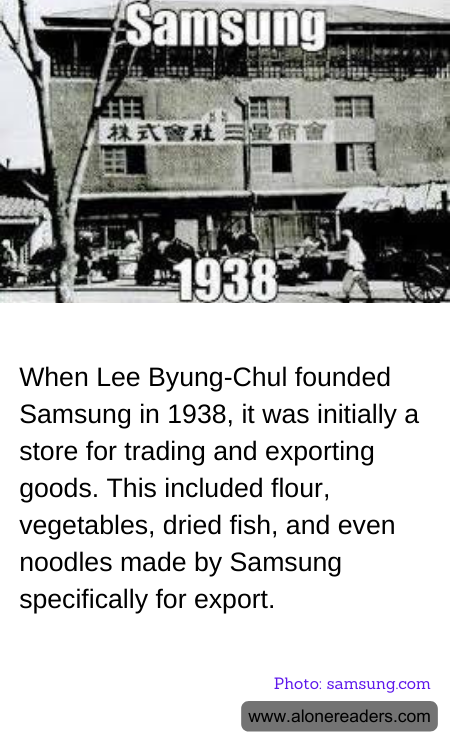
When Lee Byung-Chul established Samsung in 1938, it was not the high-tech conglomerate we know today but a humble trading company based in Su-dong. The firm started off by exporting locally grown groceries such as dried fish, fruits, and vegetables to Manchuria and Beijing. In its primitive stage, Samsung was essentially a small grocery store that dealt in noodles and other dried goods produced by the company itself. This initial focus was pivotal as it laid the foundational business acumen required for international trade.
Over the years, Samsung transitioned from being a simple trading company to a larger business empire, venturing into various industries. In the 1960s, under the vision of Lee, Samsung delved into the electronics industry, which eventually became its most lucrative venture. The move was a game-changer, positioning Samsung on the global stage. Samsung's growth trajectory accelerated with its entry into the electronics market, manufacturing black-and-white television sets as its first product in this sector.
The transformation of Samsung is marked by continuous evolution and innovation, which has been instrumental in its journey to becoming a leading global technology powerhouse. Today, it not only dominates the electronics market worldwide but also has substantial operations in petrochemicals, fashion, theme parks, and even biopharmaceuticals. Despite its diverse portfolio, electronics remain the most prominent facet of its business, particularly its mobile phones and semiconductors, constantly pushing the boundaries of innovation and technology.
Samsung’s evolution from a small trading store to a global conglomerate is a remarkable testament to visionary leadership and strategic adaptation. This journey underscores the importance of diversification and innovation in achieving and maintaining a competitive edge in the global business environment.
