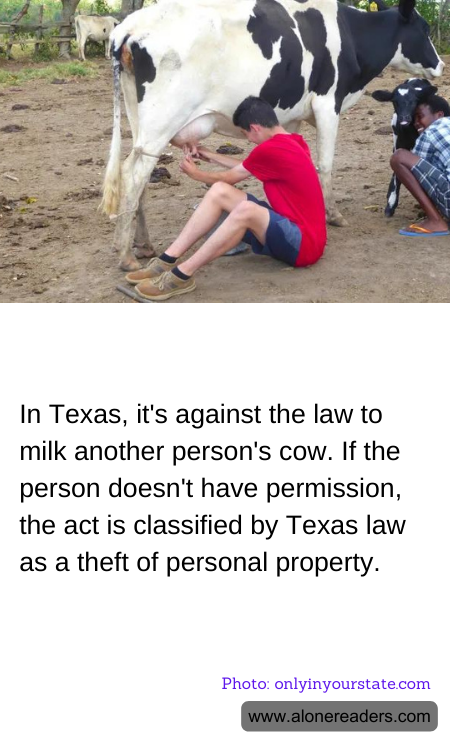
In Texas, the laws surrounding agricultural and livestock management are stringent, reflecting the state's deep-rooted agricultural heritage. One such law that highlights the importance of respecting personal property in the agricultural sector is the prohibition against milking another person’s cow without permission. This act is considered theft of personal property under Texas law.
The rationale behind the law is straightforward: a cow’s milk is regarded as a valuable product of the owner’s investment in their livestock. Dairy farmers spend significant time, resources, and effort in caring for their cows to produce quality milk. Unauthorized milting not only translates to a direct loss of produce for the farmer but also poses risks to the health and welfare of the cattle, which can be stressed or mishandled by untrained individuals.
Enforcement of this law underscores the protection of farmers’ rights and their livestock investments. It serves as a deterrent against potential theft and ensures that all harvested milk is accounted for, which is crucial for inventory and quality control. The law also implicitly supports ethical farming practices by mandating that only those who have the requisite permission and understanding of how to handle livestock correctly are involved in the milking process.
This regulation is just one example of how Texas law upholds the integrity and sustainability of its agricultural practices, ensuring that the state’s significant agricultural sector remains robust and protected from practices that could undermine it.
