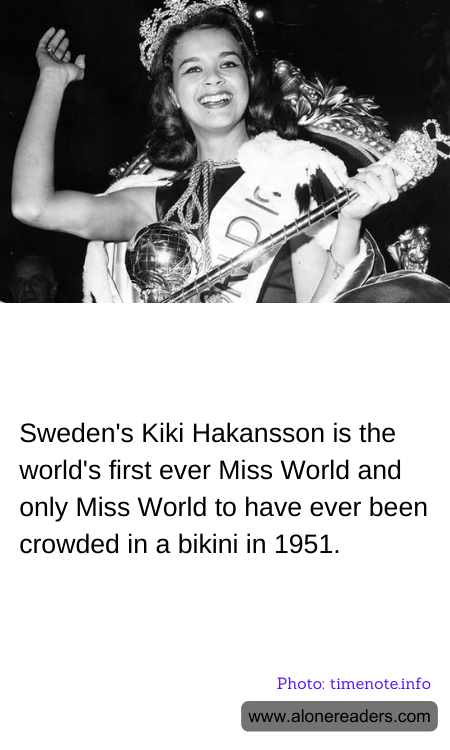
In 1951, Kiki Håkansson from Sweden made history by being crowned the first-ever Miss World. The event took a place that would set the tone for beauty pageants thereafter. Unique about her crowning was that Håkansson became the only Miss World to be crowned while wearing a bikini, an occurrence that sparked international debate at the time.
The pageant took place in London, England and was part of the Festival of Britain celebrations. The choice of a bikini, which at that time was still considered a controversial and relatively modern garment, linked the pageant to modernity and a progressive attitude. The bikini, created by French designer Louis Réard in 1946, was named after the Bikini Atoll, where post-war testing on the atomic bomb was happening. Réard believed that the revealing new design would create an "explosive commercial and cultural reaction" similar to an atomic bomb. True to his prediction, the bikini quickly became a symbol of the post-war liberation.
Håkansson's bikini crowning stirred significant media attention and public discourse about decency and the evolving standards of beauty. While many welcomed this fresh iconography of feminine beauty, traditionalists and conservative groups were outraged by the bold display of the female form. This backlash led to countries like Spain and Ireland threatening to withdraw from future contests if similar attire was permitted.
Interestingly, the event significantly impacted beauty pageant dress codes worldwide, marking the last time a Miss World would be crowned in a bikini. Subsequent contests saw the swimsuit segment toned down or altered in response to conservative pushback. The shift also reflected wider societal dynamics where the liberation of women's fashion encountered traditional values on global stages.
Today, Kiki Håkansson's win remains a notable milestone in the history of beauty pageants, reflecting both a moment of significant change and the cultural tensions of the mid-20th century. Her crowning in a bikini symbolized a break from tradition and the evolving norms of fashion and femininity. This pivotal event not only crowned a queen of beauty but also underscored the complex interplay between modernity, tradition, and transformation in the post-war world.
