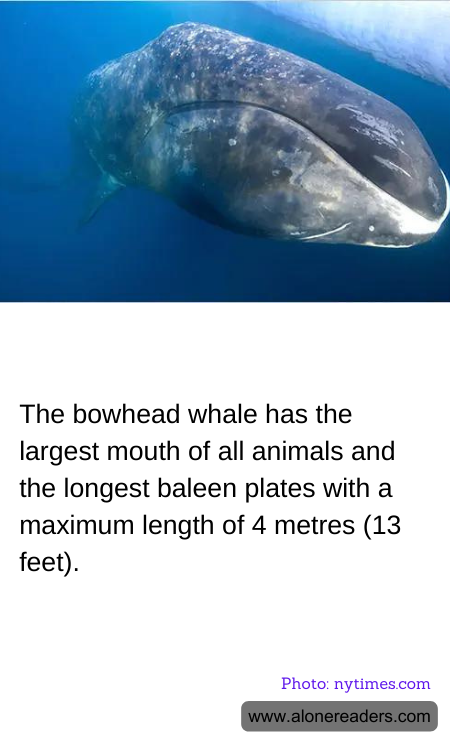
The bowhead whale, a remarkable marine mammal inhabiting the Arctic and sub-Arctic waters, holds the title for having the largest mouth among all animal species. This gigantic mouth, constituting almost one-third of the animal’s body length, empowers it to efficiently skim vast volumes of Arctic water to forage on zooplankton and other small organisms. What distinguishes these giant creatures further are their baleen plates - the longest found in any whale species, reaching up to 4 meters (13 feet). These baleen plates play a crucial role in the whale’s feeding mechanism. As water filters through these long, fringed plates, tiny prey are trapped and subsequently consumed.
This unique adaptation not only illustrates the evolutionary prowess of the bowhead whale but also underscores its ecological role in the marine food web. Being able to process enormous quantities of water each day allows the bowhead whale to thrive in the nutrient-rich but dark and cold Arctic waters. Moreover, their impressive lifespan, which can exceed 200 years, marks them as some of the longest-lived mammals on earth. This longevity, combined with their expansive, keratinous baleen plates, suggests an adaptation suited to long periods of feeding in resource-sparse environments, ensuring their survival through extreme seasons where food is scarce.
Conservation efforts are critical for the bowhead whale, as their habitat faces significant threats from climate change and melting polar ice. As ice caps reduce, it alters the distribution of the plankton and other microorganisms that form the primary diet of these whales, thus impacting their feeding patterns and migration routes. Furthermore, increasing human activities in these fragile habitats, such as shipping and oil and gas exploration, pose potential threats through noise and water pollution.
Research and monitoring of bowhead whale populations and their habitats are ongoing, equipping scientists and conservationists with essential data to understand better the impacts of environmental changes on these magnificent creatures. By fostering awareness and promoting protective measures, we can hope to secure a future for the bowhead whale, preserving not only an extraordinary species but also the health and diversity of Arctic marine ecosystems. Efforts to reduce global warming and regulate activities that disrupt their natural habitat are paramount in conserving these majestic giants of the ocean.
