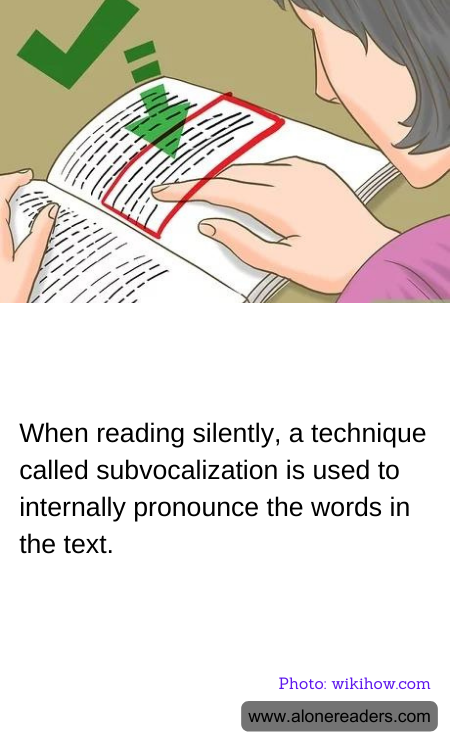
Reading silently is a common practice that might seem quiet and unvocal on the outside, but internally, a fascinating cognitive process takes place. Subvocalization, sometimes referred to as silent speech or auditory rehearsal, plays a crucial role in how we interpret and understand text during silent reading. This process involves the internal pronunciation of words, where the reader imagines the voice and articulation of the words as if they were speaking aloud.
Subvocalization is linked to the tiny movements in the speech muscles that are activated during silent reading, though no audible sound is produced. These muscle movements are connected to the larynx or voice box, which is engaged ever so slightly during reading. Researchers have discovered this by measuring the neurological and muscular activity, which reveals that our vocal cords subtly engage when we encounter text.
Though often considered a cognitive redundancy that may slow down reading speed, subvocalization serves important functions in enhancing comprehension and memory retention. It facilitates the encoding of written text into spoken language, a form that the human brain is more adept at processing. The auditory components of subvocalization leverage the brain’s natural language capabilities, making it easier to understand complex narratives or dense theoretical material.
Efforts to eliminate subvocalization are not uncommon among speed reading techniques, suggesting that by cutting down on this internal speech, one can read faster. Techniques often involve conscious control over this involuntary process, training the reader to absorb content visually without the need to internally vocalize each word. However, these techniques may not be suitable for everyone, as they can compromise the depth of understanding and retention of the information, particularly when dealing during dense or elaborate texts.
Understanding and harnessing the benefits of subvocalization can improve both the speed and comprehension of reading. For many, especially when tackling difficult or unfamiliar material, slowing down to allow for complete subvocalization provides a greater grasp of content and a richer reading experience. Thus, subvocalization is not merely a quirk of silent reading but a fundamental component that bridges our internal cognitive processes with the external world of text.
