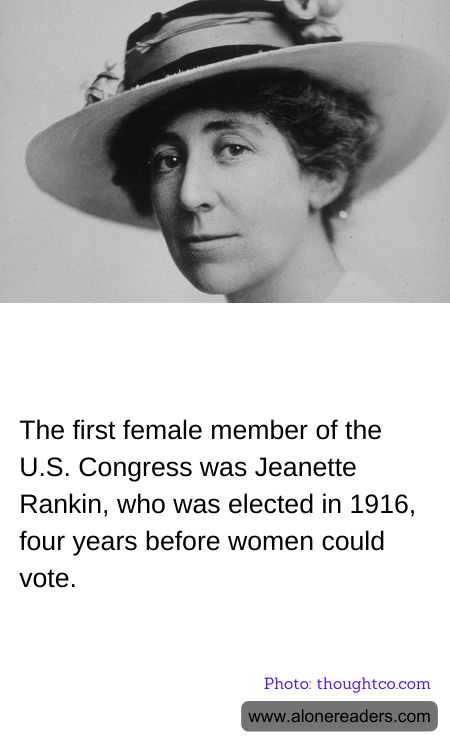
In 1916, a groundbreaking event took place in the political landscape of the United. States: Jeanette Rankin, a woman from Montana, was elected to Congress. This historic election made Rankin the first female member of the U.S. Congress, occurring four years before the 19th Amendment granted women across the country the right to vote. Rankin's election was not just a personal victory but a monumental achievement for women's rights and representation in government.
Jeanette Rankin's entry into politics was fueled by her strong advocacy for women's suffrage and social reform. Before her congressional role, she was actively involved in the women's suffrage movement, working tirelessly to secure voting rights for women in various states including Washington and Montana. Rankin's success in these movements demonstrated her dedication and effectiveness as a leader, setting the stage for her subsequent electoral victory.
Once in Congress, Rankin continued to champion the causes she believed in. Notably, she was the only member of Congress to vote against entering both World War I and World War II, reflecting her firm stance on pacifism and her belief in resolving conflicts through nonviolent means. Her opposition to war, especially her vote against entering World War II following the attack on Pearl Harbor, was highly controversial and contributed to her defeat in later elections.
Despite such controversies, Rankin’s legacy as a pioneer for both women and pacifists remains influential. Her courage in standing by her convictions, even when faced with intense criticism and public backlash, is a testament to her commitment to her principles. Throughout her life, she continued to advocate for peace and women's rights, remaining active in various movements and continuing to inspire generations.
Jeanette Rankin's journey to and in Congress is a significant chapter in the history of American politics, symbolizing a breakthrough for gender equality in government. Her election into Congress marked the beginning of a new era, paving the way for many more women to pursue and achieve political leadership roles. By demonstrating that women could serve effectively in high political offices, Rankin contributed to slowly changing public perceptions about women's capabilities and roles in society. Her legacy endures, highlighting the importance of perseverance and principle in the fight for equality and justice.
