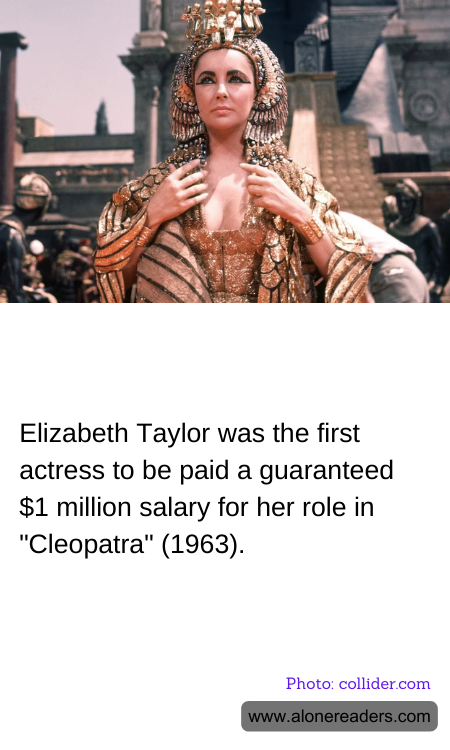
Elizabeth Taylor, a name synonymous with Hollywood glamour and prodigious talent, made history with her groundbreaking salary for the film "Cleopatra" in 1963. Before Taylor, such a hefty sum for an actress was unheard of in the film industry. Her contract negotiations for "Cleopatra" are legendary, marking a significant moment in the evolution of pay scales for actors, especially women.
At the time, Taylor was one of the most sought-after stars in cinema, known not just for her beauty but also for her considerable acting prowess. The film "Cleopatra" itself was one of the most ambitious projects ever undertaken by Hollywood, with extravagant sets and costumes, and an almost unmatched scale of production. This historical epic aimed to capitalize on Taylor’s fame and the public's fascination with ancient histories, and who better than Taylor to embody the iconic Egyptian queen?
Taylor’s $1 million paycheck set a new standard in the industry, reflecting not only her status but also the roles and recognition that female actors could aspire to acquire. This payout was particularly significant, considering the ongoing issues regarding pay equity that still exist in Hollywood today. Taylor's precedent empowered actresses to demand better pay and more substantial roles, echoing her influence. The salary also became a crucial talking point in discussions about the gender wage gap in the entertainment industry.
Moreover, the film "Cleopatra" is often cited for its spiraling costs and production troubles, eventually becoming the most expensive movie made at the time. It nearly bankrupted 20th Century Fox, but the gamble to cast Taylor and fund the lavish production highlighted the shift towards blockbuster cinema, where star power and high production values drove huge box office returns.
Elizabeth Taylor's $1 million contract for "Cleopatra" not only elevated her status as one of the first true "superstars" of cinema but also demonstrated the immense drawing power of lead actors capable of shaping the financial and creative landscapes of their projects. Her legacy in this realm is profound, influencing contract negotiations and star compensations in Hollywood to this day, making her an enduring figure not only in the annals of film history but also in the evolution of actor’s rights and compensation.
