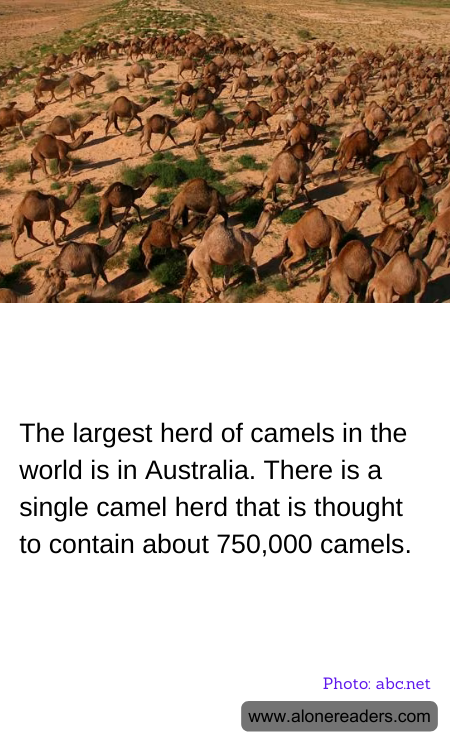
Australia boasts the world's largest herd of wild camels, with estimates often citing numbers approaching 750,000. Originally introduced from British India and Afghanistan in the 19th century for transport and construction during the colonization of the central and western parts of Australia, camels were crucial in opening up the arid interior. They were used for carrying heavy loads, helping to build railroads and other infrastructure.
However, with their services becoming redundant due to modern transport and machinery, these hardy animals were released into the wild, where they thrived in the Australian outback. The vast, arid expanses of the continent mirror the harsh habitats of their native Middle Eastern and Central Asian regions, providing an ideal environment where camels face few natural predators.
Over the decades, the camel population in Australia burgeoned, leading to significant ecological consequences. Camels are known for their ability to survive in harsh conditions, a trait that allows them to access remote natural areas, often resulting in damage to native vegetation and water sources. Their foraging can lead to soil erosion and impacts on native plant and animal species, some of which are endangered.
In response to their environmental impact, the Australian government has undertaken measures to control the camel population. These include culling and exporting them to countries where there is demand for camel meat and live animals. Additionally, some innovative approaches have been explored, such as using camels to help reduce the spread of wildfires by clearing flammable underbrush in fire-prone areas.
Despite these problems, the camels of Australia remain an iconic symbol of how introduced species can adapt and thrive. Their population not only emphasizes the adaptability and resilience of these creatures but also presents ongoing challenges and opportunities for environmental management in Australia.
