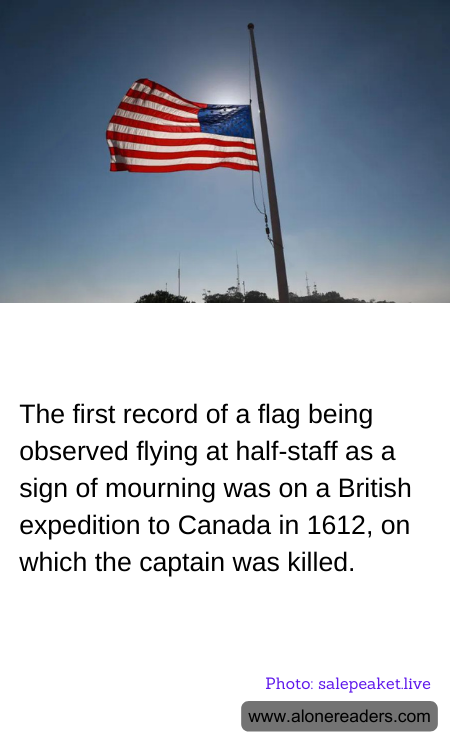
Flags flown at half-staff are a powerful symbol of respect, mourning, and solidarity, often observed during moments of national tragedy or to honor the passing of significant figures. The origins of this practice can be traced back as early as 1612 during a British expedition to Canada. The captain of this expedition was tragically killed, prompting the ship’s crew to lower the flag halfway up the ship’s mast as a mark of respect and mourning. This gesture had a profound effect and set the precedent for half-staff flag flying.
Over the centuries, the tradition of flying a flag at half-staff has evolved and is now deeply ingrained in many cultures around the world. In the United States, for example, this practice is commonly observed at government buildings and public spaces to mark significant national events, mourn the deaths of government officials, or memorialize American citizens who have made significant contributions. The U.S. flag code stipulates that the flag should be briskly hoisted to the peak for a moment before being lowered to the half-staff position, where it remains until it is raised again to full-staff at the day’s end—a visual journey reflecting the process of mourning and recovery.
Moreover, guidelines and protocols can vary between countries and even within different regions of the same country, each adding their own customs to the act of lowering flags. In some cases, the duration and specific actions involved in flying a flag at half-still can carry deep national or local significance, further emphasizing the gravity of the occasion.
This practice is not only reserved for political figures or public servants; it has also been extended to honor victims of tragedies such as natural disasters, acts of terrorism, and other events that result in significant loss of life. In these instances, flying the flag at half-staff serves as a visual expression of community solidarity and shared grief, reminding citizens of a collective loss and a united front in the face of adversity.
As such, the act of flying a flag at half-staff remains a poignant reminder of the significance of loss within a community, whether it be local, national, or international. It continues to be a powerful act of collective human expression, symbolizing respect, mourning, and memory.
