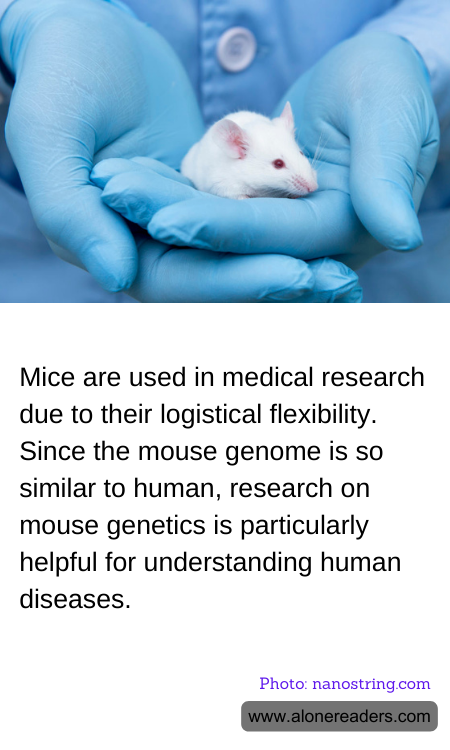
Mice have long been favored in medical research, not just due to their small size and ease of care, but significantly for their genetic, biological, and behavior similarities to humans. In fact, mice share over 95% of their genes with humans, making them incredibly valuable in genetic research. These similarities allow scientists to study genetic diseases and other conditions with an accuracy that would be difficult to achieve with other models.
The genome of the mouse was fully sequenced in 2002, which was a major milestone that has vastly increased their utility in the field of medical research. This has enabled researchers to manipulate mouse genes, either by removing them or introducing mutations to understand their functions and by extension, the implications for human health. For instance, by knocking out certain genes in mice, researchers can study the effects of those genes on various health conditions, ranging from cancer to cardiovascular diseases, and even mental health disorders.
Moreover, the reproduction and gestation periods of mice are relatively short, meaning that multiple generations of mice can be observed over a short period. This accelerates genetic studies, allowing for the observation of the effects of genetic changes over several generations within a feasible timeframe for researchers. Mice also breed prolifically, which is advantageous for studies requiring large sample sizes to ensure statistically significant results.
Beyond genetics, the physiological and anatomical similarities of mice to humans enable extrapolation of research findings. Drug testing is another area where mice prove indispensable. They are often used in preclinical trials to assess the safety and effectiveness of new treatments before they are tested in human trials. Researchers can observe potential side effects and adjust dosages or formulations accordingly before any human is exposed to the drug.
Despite the significant advantages, it is worth considering the ethical aspects and the limitations of mouse models. Not all human genes have equivalents in mice, and some human diseases are difficult to replicate in mice. Nonetheless, the use of mice continues to be a cornerstone of biomedical research, facilitating advances in medical science at a rate that would not otherwise be possible. As research methods evolve, the role of mice in medical research may change, but for now, they remain invaluable for our understanding of human health and disease.
