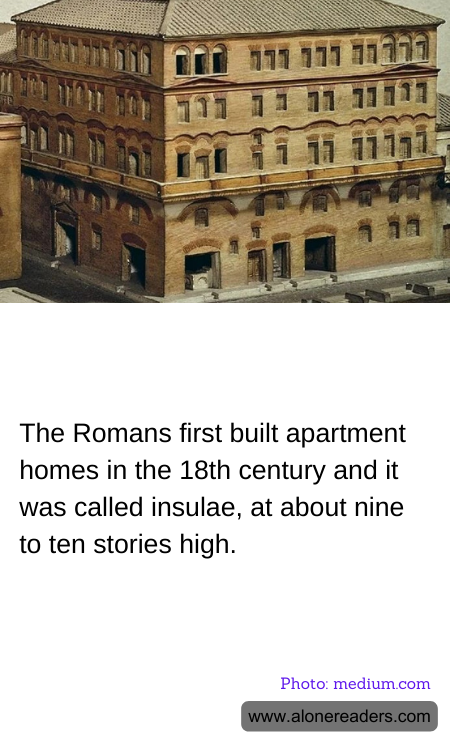
The concept of apartment living is deeply rooted in history, with one of the earliest known examples being the Roman insulae. Contrary to the 18th-century attribution, these structures were actually developed during the Roman Empire, several centuries prior. Insulae were essentially the precursors to modern apartment buildings and were constructed to accommodate the burgeoning population of urban centers like Rome.
Insulae were typically multi-story buildings ranging from three to five floors, even going up to six or seven in more densely populated areas. There are recorded instances of buildings as high as nine or ten stories, though these were rarer, potentially due to structural and safety concerns. The ground floors of insulae were commonly reserved for shops and businesses, with the residential units above them. These apartments were primarily occupied by the lower and middle classes of Roman society, as the upper classes preferred more spacious, separate houses.
The living conditions in insulae varied widely, often reflective of the economic status of their inhabitants. Wealthier residents might occupy larger, more comfortable units on the lower floors while poorer citizens lived in smaller, cramped spaces higher up. Due to the rapid construction and high density, many insulae suffered from structural problems and were susceptible to fire and other hazards. Over time, regulations were introduced to limit their height and improve safety standards.
Despite these challenges, insulae highlight an early form of urban housing that illustrates the ancient Romans' architectural ingenuity and urban planning. These structures allowed for efficient use of space within the bustling, crowded capitals of the Roman Empire and set a precedent for future generations of multi-story residential buildings. Today's urban apartments owe much to this ancient model, which first demonstrated the benefits and complexities of vertical living arrangements in dense urban environments. The legacy of insulae underscores the enduring need for housing solutions that balance density with inhabitability, a challenge that continues to resonate in modern cities around the world.
