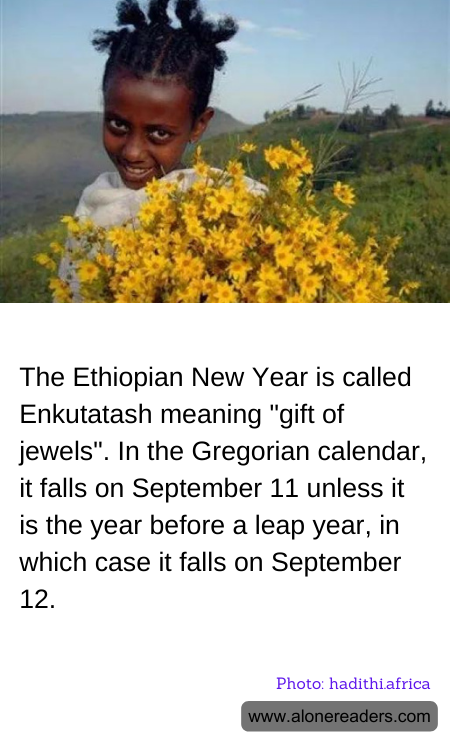
Ethiopian New Year, also known as Enkutatash, is a vibrant and joyous celebration that marks the beginning of a new year according to the Ethiopian calendar. The term Enkutatash, which translates to "gift of jewels," has its origins in the story of the Queen of Sheba's return from her visit to King Solomon in Jerusalem. According to tradition, her chiefs welcomed her back by replenishing her treasury with enku, or jewels. This festive day typically falls on September 11 in the Gregorian calendar, although it shifts to September 12 in the year preceding a leap year.
The celebrations begin early in the morning when families gather to attend church services dressed in traditional white garments. The air fills with the scent of fresh flowers, particularly the bright yellow Meskel daisies that are synonymous with the holiday and used in many decorations. After the religious services, the day continues with singing, dancing, and the sharing of a large family meal. One of the traditional dishes served is Doro Wat, a spicy chicken stew, eaten with injera, a type of flatbread.
Children play a significant role in the festivities; they don their finest clothes and go door-to-door singing songs. In return, they receive small gifts of money or bread, which adds to the communal spirit of sharing and caring that is central to the day’s celebrations. Moreover, streets and homes are adorned with fresh green grass, and relatives exchange bouquets as a symbol of new beginnings and renewed relationships.
Central to Enkutatash is the lighting of bonfires on the eve of the New Year, symbolizing the coming of the new season and burning away the dross of the previous year. Friends and family gather around the fire to sing and dance well into the night, making resolutions and expressing hopes for peace and prosperity in the coming year.
Enkutatash is more than just a national holiday in Ethiopia; it is a symbol of resilience, unity, and a reflection of the rich cultural heritage that transcends generations. It is a time of giving thanks, reflecting on the past, and looking forward with optimism. Not only does it celebrate the New Year, but also the regenerative powers of the rainy season just ended, which has washed away the dust and prepared the land for the new planting season. This unique blend of nature’s renewal and cultural tradition makes the Ethiopian New Year a beautiful expression of hope and rebirth.
