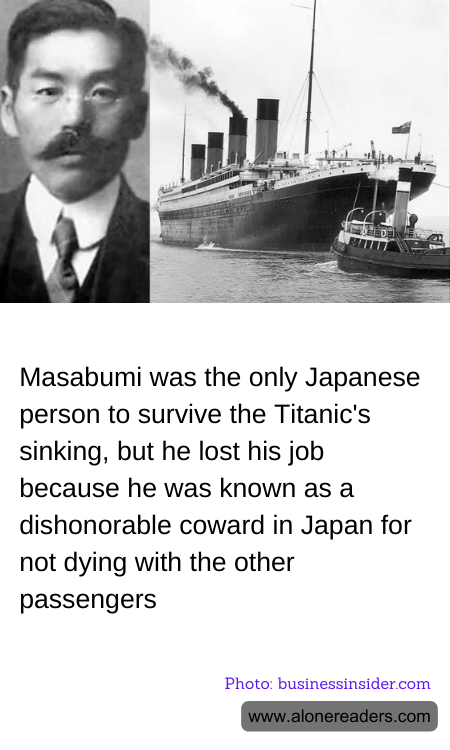
Masabumi Hosono, the only Japanese passenger aboard the RMS Titanic, survived one of the most harrowing maritime disasters in history. However, upon his return to Japan, his survival was not met with praise but with substantial ridicule and scorn. In the early 20th century Japan, the social and cultural expectations held that men should exhibit honor and valor, particularly in life-threatening situations. The societal norm expected that one should choose an honorable death over a dishonorable life. Hosono, who found a spot on a lifeboat amidst the chaos of the sinking, was later branded a coward for choosing to survive when so many others, including women and children, perished.
The backlash in Japan was intense, driven by the era's media and further fueled by nationalist sentiments. Newspapers criticized his survival as shameful, leading to his dismissal from his prestigious job at the Japanese Ministry of Transport. His written account of the disaster, intended to be a private reflection for his wife, was published without his consent and further used to tarnish his image. He described in his account the turmoil and his final decision as the ship was sinking, which painted a picture at odds with the heroic tales of sacrifice that were popularly celebrated.
This condemnation was rooted deeply in the samurai code of honor, which profoundly influenced Japanese society. Honor, along with the expectation that one must die rather than face dishonor, was a concept that resonated strongly in his homeland. The negative perception was so overwhelming that it overshadowed the rest of his life and career. It wasn't until many decades later, long after his death, that perspectives began to shift. The evolving understanding of human rights and personal survival, broader discussions around the narratives of the Titanic survivors, and changes in cultural values over time have led to a reevaluation of Hosono’s actions. Modern views are more compassionate, often critical of the harsh judgment he faced upon his return.
Today, Masabumi Hosono's story is often cited in discussions about societal norms, cultural expectations, and personal survival. It serves as a poignant reminder of how cultural contexts can deeply influence the reception and judgment of personal actions in catastrophic situations. His life story, albeit tragic post-Titanic, provides an important narrative on human survival instinct, societal pressure, and the reinterpretation of honor in modern times.
