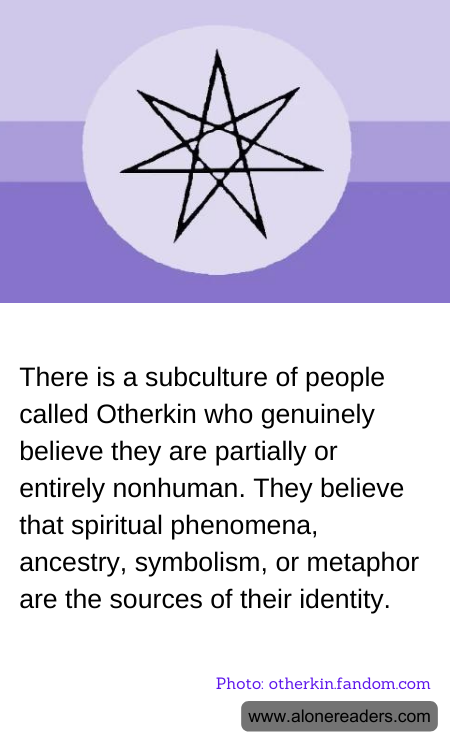
The Otherkin subculture encompasses individuals who identify as partially or entirely nonhuman. They often believe that they are, in essence, not purely human on a spiritual, metaphonic, or metaphoric level. This sense of identity may include, but is not limited to, identifying as mythical creatures like elves, dragons, or fairies, as well as existing animals or extraterrestrial beings. The origins of these beliefs are usually rooted in a deep, personal understanding of spirituality and an interpretation of their existence beyond conventional human experiences.
Otherkin often describe their experience as being intrinsically different from conventional human identity, involving characteristics, memories, and sensations that suggest a nonhuman aspect to their being. For many, these experiences are corroborated through spiritual experiences, meditative insights, or other personal revelations, which provide them with a sense of otherness that is profound and intrinsic to their nature.
This identity can profoundly affect how Otherkin interact with the world and with people around them. It often involves a community-based approach where individuals find support and understanding amongst others who share similar experiences and beliefs. Online forums, social media platforms, and specialized gatherings allow Otherkin to explore their identities, exchange experiences, and navigate their often complex feelings and senses of self.
Critics often question the validity of Otherkin identities, attributing them to imaginative escapism or psychological phenomena. However, for those within the community, Otherkin identity is a significant and meaningful aspect of their lives, providing a vital framework for interpreting their experiences and sensations that do not align with typical human norms.
Despite the controversies and skepticism, the Otherkin community continues to thrive, largely due to its inclusive and supportive nature, which embraces diverse interpretations of existence and identity. This subculture challenges conventional ideas about what it means to be human and the fixed boundaries of identity, offering a unique perspective on the complexities of self-understanding in the modern age.
