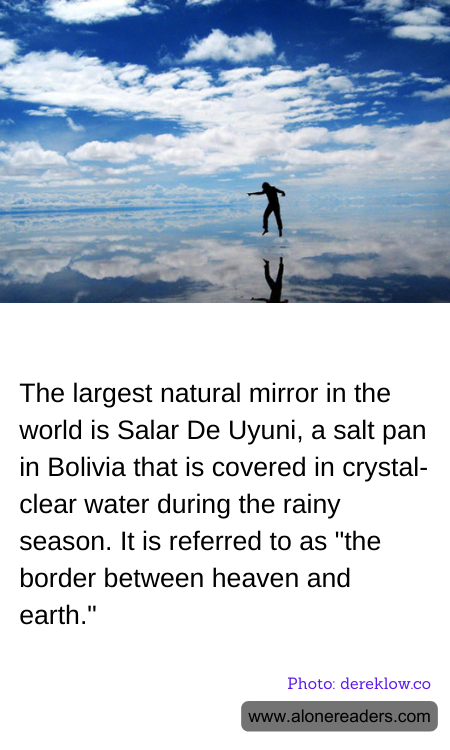
Salar de Uyuni, located in the southwest corner of Bolivia, is the world's largest salt flat, covering over 10,000 square kilometers. This vast expanse was formed as a result of transformations between several prehistoric lakes, which over time left a water-salted crust atop a vast pool of brine. This crust is extraordinarily flat, with average altitude variations within one meter over the entire area of the Salar.
The most breathtaking phenomenon at Salar de Uyuni occurs during the rainy season, from December to April. During this period, a thin layer of water transforms the flats into a stunning reflection of the sky, effectively turning it into what is often described as the largest natural mirror on Earth. This mirror-like effect creates a surreal landscape where the horizon seems to disappear, merging the sky and the ground into one continuous plane. It’s this unique natural feature that has earned Salar de Uyuni the nickname "the border between heaven and earth."
Visitors from around the world flock to Salar de Uyuni to witness this spectacular scene and to explore the surrounding area, which is rich in other natural wonders. The region boasts hot springs, geysers, and colorful lagoons dotted with flamingos. The nearby Reserva de Fauna Andina Eduardo Avaroa, a reserve, hosts several rare species of plants and animals, offering further incentive for nature lovers and eco-tourists.
The flats are also culturally significant, featuring island hills (such as Isla Incahuasi) covered in cacti and fossils. These islands provide a stark contrast to the flat barrenness of the salt flats. Local communities, such as the town of Uyuni, rely on tourism but also harvest the salt, and the region is increasingly relevant in global markets due to the lithium reserves found in its brine.
Salar de Uyuni not only contributes to Bolivia's natural beauty and tourism but also plays a critical role in the cultural and economic practices of the local communities. It remains a place of mystique and allure, often featured in photographic exhibitions and travel documentaries, which continuously seduce adventure seekers, photographers, and nature enthusiasts from around the globe. The salt flats of Uy INI truly embody a place where the beauty of the earth meets the artistry of the sky.
