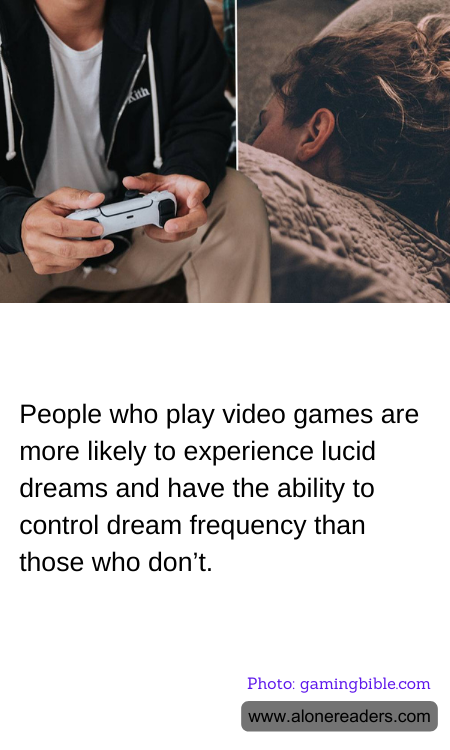
The intriguing intersection between video gaming and dream control has garnered attention in both psychological research and pop culture. Studies suggest that individuals who frequently engage in video gaming might be better equipped to experience lucid dreams and exert control over their frequency and nature compared to those who do not play video games.
Lucid dreaming is a phenomenon where the dreamer becomes aware that they are dreaming while still in the dream state and can sometimes manipulate the events of the dream deliberately. Video games, which often require players to navigate complex virtual environments, solve puzzles, and make real-time strategic decisions, seem to hone similar cognitive processes that are employed during lucid dreams. Gaming regularly requires the activation of areas in the brain associated with navigation, memory, and strategic planning, which are also crucial in recognizing and manipulating dream environments.
Moreover, the interactive, often immersive nature of video games could contribute to an individual's ability to realize they are dreaming. By constantly engaging with alternate realities, gamers might develop a heightened awareness and an ability to discern shifts in their environments — skills that are critical in achieving lucidity during dreams. Additionally, the problem-solving and decision-making demanded in many games could empower individuals to better control their dreamscapes once they realize they are dreaming.
There is also a sensory component to consider. Video games involve dynamic visual and auditory stimuli and require mental flexibility to cope with rapidly changing scenarios. This kind of sensory engagement might make gamers more apt to notice incongruities in dreams that clue them into the fact they're dreaming, setting the stage for lucidity.
The relationship between video gaming and dream control opens up fascinating possibilities for therapeutic approaches, such as treating nightmares or exploring psychological issues within the safe confines of a dream. By potentially increasing the frequency of lucid dreaming, gamers might have a unique capacity to engage more deeply with their subconscious thoughts and emotions.
As research in this area continues to expand, it brings with it a greater understanding of how virtual experiences can intersect with and influence our subconscious landscapes, suggesting that activities like gaming might have deeper psychological implications than previously thought. Whether used for entertainment, skill development, or psychological exploration, video games might just be the doorway to a new frontier in dream control and cognition.
