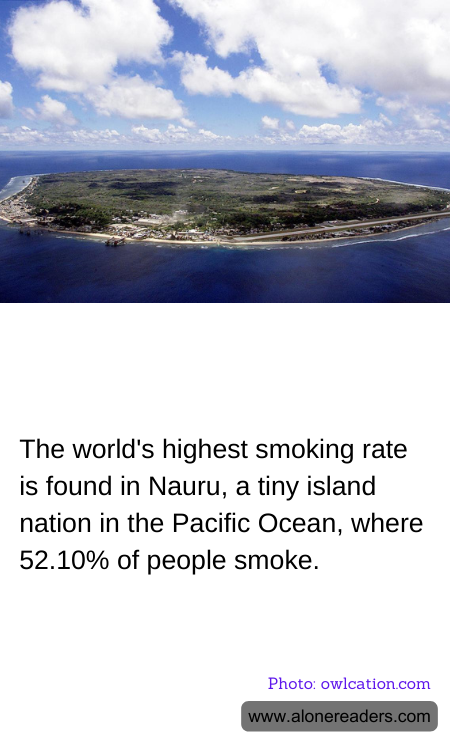
Nauru, a small island nation in the Pacific Ocean, holds a concerning record: it has the highest smoking rate in the world, with 52.10% of its population indulging in the habit. This alarming statistic not only highlights a significant public health issue but also sheds light on broader social and economic challenges facing the island. Smoking, which is a major risk factor for a host of serious health problems including lung cancer, heart disease, and respiratory conditions, presents substantial health implications for the population of Nauru.
The high smoking rate in Nauru can be attributed to several factors including cultural norms, limited public health education, and the availability of tobacco products. In many Pacific Island nations, smoking is deeply ingrained in the social fabric, often starting at a young age and supported by community practices. Additionally, the economic challenges and the lack of stringent regulations on tobacco sales contribute to the prevalence of smoking.
The impact of such a high smoking rate is profound, particularly in a country with scarce medical resources and limited access to healthcare services. The burden on the health system is significant, with a large percentage of health issues in the population being directly related to tobacco use. Furthermore, the economic implications are also severe, as a healthier workforce is crucial for the development of any nation, particularly one as small and remotely located as Nauru.
Efforts to reduce smoking in Nauru must be multifaceted. Public health campaigns tailored to the local context, stricter regulations on tobacco retail, and programs aimed at smoking cessation are critical. International aid and collaboration might also be required to amplify these efforts, providing the necessary resources and expertise. Moreover, integrating education about the risks of smoking into schools and community programs could shift norms and reduce the initiation of smoking among the young population.
Addressing the challenge of high smoking rates in Nauri is essential not just for the immediate health benefits, but for the long-term economic and social stability of the island. With concerted local and international efforts, it is possible to combat this issue and improve the overall health of Nauru's population.
