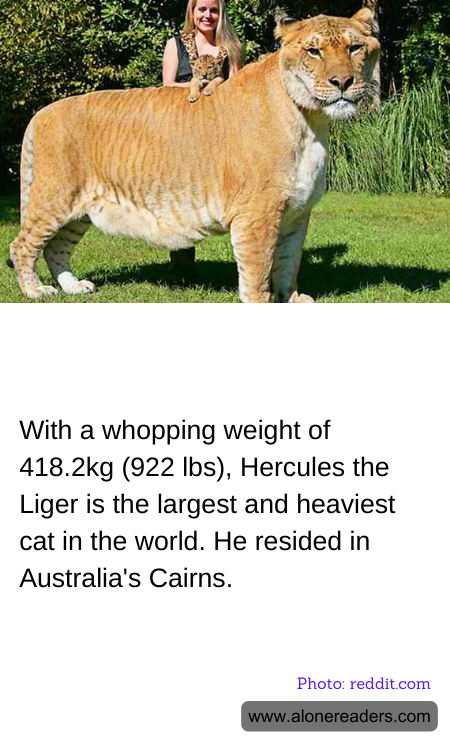
Hercules the Liger, with his staggering weight of 418.2 kg (922 lbs), certainly claims the title of the largest and heaviest cat in the world. This remarkable hybrid, born from the mating of a male lion and a female tiger, once resided in Australia's scenic Cairns, drawing the interest of zoologists and animal enthusiasts alike.
Hercules' immense size can be attributed to a phenomenon known as hybrid vigor, which occurs when the crossing of two different species results in a hybrid that can grow larger than either parent species. This genetic blend not only gave Hercules his extraordinary size but also a unique appearance that features a blend of both his lion and tiger heritage. His coat was sandy with faint stripes, blending the tawny color of a lion with the striped patterning of a tiger, which made him a spectacle of natural beauty and power.
Despite his intimidating size, Hercules was known for his gentle demeanor towards the human handlers who cared for him, showing a calmness and level of interaction that made him a favorite among those who worked with him. As a liger, Hercules required a specialized diet and healthcare regimen to support his health and manage issues related to his incredible size, such as joint stress and cardiac demands, which were continually monitored by a dedicated team of veterinarians.
Hercules' impressive physique and gentle nature made him a popular subject in discussions about the ethics and possibilities of breeding hybrid animals. While his existence demonstrated the awe-inspiring capabilities of genetic crossing, it also sparked debates about the impacts on the animals' well-being and the broader implications for conservation efforts.
Sadly, ligers like Hercules are often prone to health issues due to their hybrid genetics and massive size, and they usually have shorter lifespans compared to their parent species. The story of Hercules is not only a testament to the marvels of genetic possibilities but also a poignant reminder of the responsibilities humans hold when interfering with nature. His legacy continues to inspire and educate people about the complexity of wildlife genetics and the importance of thoughtful conservation practices.
