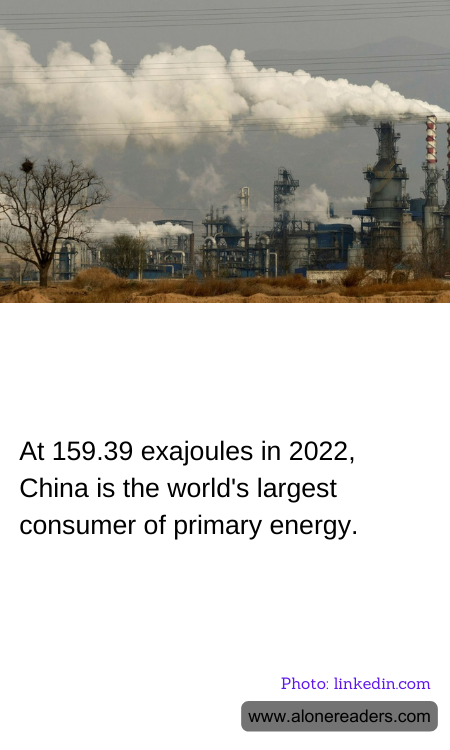
China's status as the world's largest consumer of primary energy, recording a massive 159.39 exajoules in 2022, underscores its pivotal role in the global energy market. This staggering figure reflects both China's economic magnitude and the extensive demands of its population and industrial sectors. As China continues to develop, its energy consumption patterns have significant implications for global energy production and policy making.
China’s energy consumption is driven by its vast industrial base. As the world's manufacturing hub, China requires an enormous amount of energy to power its factories, plants, and machinery. The country's urbanization and economic development have also led to increased residential and commercial energy use. Furthermore, China’s transportation sector, which includes millions of vehicles on its roads, contributes substantially to its energy consumption.
The reliance on coal has traditionally dominated China’s energy portfolio, which poses enormous challenges for environmental sustainability and public health. Recognizing these issues, the Chinese government has been actively pursuing a more diversified energy strategy. This includes massive investments in renewable energy sources such as wind, solar, and hydroelectric power, aiming to reduce the carbon footprint of its energy consumption significantly. China has emerged as a global leader in renewable energy production, reflecting its commitment to transitioning towards more sustainable energy sources.
However, the transition to renewable energy is complex and fraught with challenges. The intermittency of renewable sources, the need for significant investments in grid infrastructure, and the social implications of moving away from coal are significant barriers. Despite these challenges, China’s direction is clear, as it aligns more with global efforts to combat climate change through the reduction of carbon emissions and the promotion of sustainable energy practices.
In conclusion, China’s role as the largest consumer of primary energy is a critical element of both its national policy and its position in the international sphere. How China manages its energy consumption and navigates the transition towards greater sustainability will not only define its own developmental trajectories but also significantly influence global environmental outcomes and the global economy. Its actions are closely watched by policymakers, environmentalists, and businesses worldwide. As of 2022, the effects of its energy policies and innovations are beginning to reshape the global landscape of energy consumption and environmental conservation.
