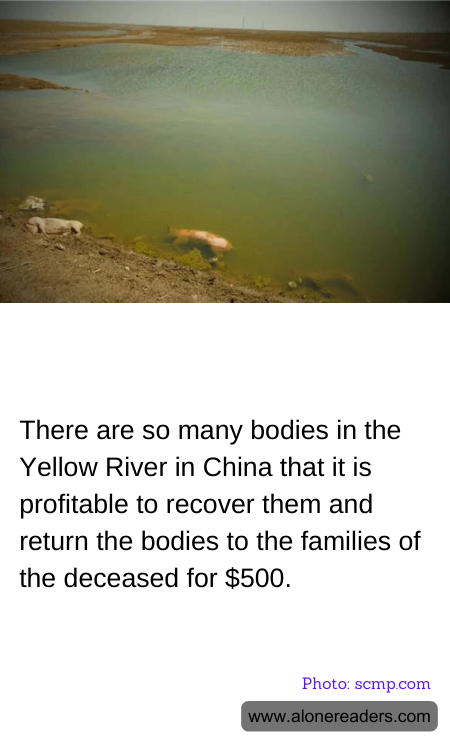
The Yellow River, China's second-longest waterway, is famously known as the "Mother River" and has historically been both a nourisher of the fertile lands that line its banks and a devastating source of floods. In recent reports, a rather grim aspect of its existence has come to light. The river, due to a combination of high population density in surrounding areas, accidents, and sadly, suicides, has seen a significant number of deaths, leading to bodies being discovered in its waters.
Local fishermen and other inhabitants, who know the river intimately, have taken on the role of recovering these bodies, which has turned into a melancholic but profitable occupation. They charge around $500 to retrieve a body and return it to grieving families. This fee covers the often dangerous and distressful task of retrieval and also compensates for the potential loss of income from their regular work, typically fishing, as these missions can take a considerable amount of time and effort.
This distressing situation raises several ethical, social, and environmental issues. From an ethical standpoint, the commodification of such a sensitive service as retrieving the deceased sparks debate about the exploitation of grieving families and the dignity of the deceased. Socially, this issue underscores the profound impacts of mental health, public safety, and social security nets in the region. There's a pressing need for improved surveillance and safety measures along the river to prevent such tragedies. Additionally, mental health support and public awareness campaigns could potentially reduce the number of incidents that lead to these recoveries.
Moreover, the situation also highlights broader environmental concerns. The Yellow River has suffered severe pollution levels over the years, impacting water quality, wildlife, and the health of communities relying on this crucial resource. Comprehensive strategies to enhance water safety, combined with stringent enforcement of environmental regulations, are essential steps toward mitigating the problem.
Addressing this issue effectively requires a concerted effort by government authorities, non-governmental organizations, and local communities. Implementing educational programs, enhancing community-based surveillance, improving river patrolling by authorities, and establishing more accessible mental health resources could provide multiple layers of prevention. Additionally, there needs to be a conversation about ethical practices concerning the recovery of bodies, ensuring that these operations respect both the deceased and their families without imposing hefty financial burdens during times of profound grief.
