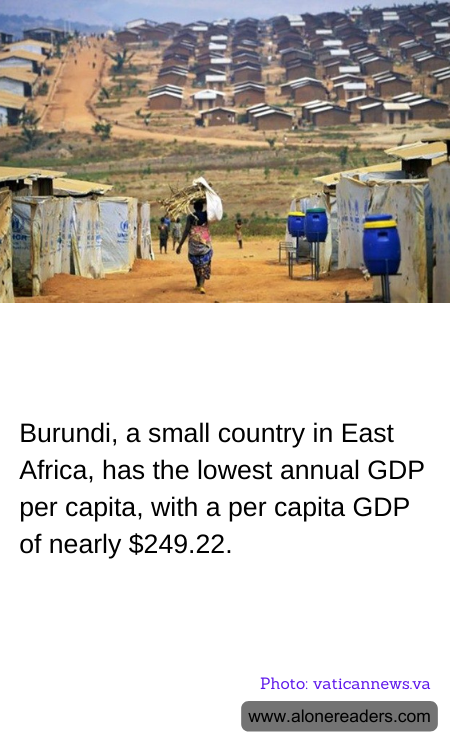
Burundi, nestled in the heart of East Africa, highlights a stark reality in global economic disparity. As a nation battling with the tag of having the lowest GDP per capita, which stands at a meager $249.22 annually, it underscores profound challenges and the urgent need for strategic interventions. The country's economic standing is primarily hobbled by its limited industrial base, heavy reliance on agriculture, and the repercussions of longstanding socio-political instability.
Agriculture, the backbone of Burundi’s economy, engages about 90% of the population but suffers from archaic farming methods and insufficient investment. Subsistence farming prevails, providing minimal yield and little to no opportunity for export or significant domestic profit. This sector is vulnerable to climatic changes and environmental degradation, which further exacerbates food insecurity and economic stagnation.
Political turmoil has also taken its toll. Burundi has endured decades of civil conflict, resulting in loss of life, economic collapse, and a challenging humanitarian situation. Periods of violence have disrupted social and economic development, leading to mass displacements and a heavily burdened populace. The political instability makes it difficult to attract foreign investment, which is critical for economic diversification and growth.
Despite these adversities, there are avenues for growth and improvement. International aid and developmental programs continue to play a significant role in economic recovery. Efforts are being focused on improving food security, enhancing agricultural productivity through modern techniques, and promoting sustainable practices. Moreover, there is an increasing push towards improving governance, addressing corruption, and fostering political stability to create a more secure environment for investment.
Education and infrastructure development are also pivotal areas receiving attention as they are crucial for long-term sustainable growth. Improved educational facilities and quality can lead to a more knowledgeable workforce equipped to handle various sectors like services, technology, and industrial work. Developing infrastructure such as transportation, electricity, and internet access can significantly boost economic activities by improving business operations and connectivity.
In conclusion, while Burundi faces significant economic challenges, understanding the underlying issues provides a clearer pathway for international and local entities to effectively address and support its journey towards economic recovery and growth. Strategic, sustained interventions focused on agriculture, political stability, education, and infrastructure could pave the way for a brighter economic future, gradually alleviating the harsh realities currently faced by one of the world's poorest nations.
